The Third Pillar of Security: Why Food Belongs Beside Energy and Defence in Danish Strategy
David Williams
Since the new Danish government announced that foreign policy, energy security and defence preparedness must increasingly be viewed as parts of the same strategic agenda, Denmark has entered a new phase of national thinking. The message from Prime Minister Mette Frederiksen's administration is clear: in a more dangerous world, resilience matters as much as prosperity.
But if energy infrastructure is now regarded as a matter of national security, Denmark may be overlooking another critical vulnerability hiding in plain sight: food production.
Isn't the question policymakers should be asking simple: should controlled indoor cultivation be considered strategic infrastructure alongside energy and defence?
At first glance, the idea may seem far removed from the geopolitical concerns dominating today's headlines. Discussions about Greenland, Arctic security, NATO commitments and energy independence appear to belong in a different category altogether.
Yet recent years have taught governments across Europe a common lesson: strategic vulnerabilities are often invisible until they become crises.
Europe's dependence on Russian gas was once viewed as an efficient economic arrangement. The COVID-19 pandemic exposed weaknesses in global supply chains that few policymakers had seriously considered. More recently, disruptions to international shipping routes and growing geopolitical tensions have demonstrated how quickly access to essential goods can become uncertain.
Food security deserves to be viewed through the same lens.
Denmark remains one of Europe's agricultural powerhouses, but modern food systems are increasingly dependent on complex international supply chains. Specialised crops, pharmaceutical-grade botanicals, medicinal plants, nutritional ingredients and other high-value agricultural products often travel thousands of kilometres before reaching Danish consumers or manufacturers.
In stable times, this system delivers efficiency and competitive prices.
In unstable times, it creates exposure.
The first signs of that exposure rarely appear as empty shelves. More often, they emerge as sudden price spikes, supply shortages and production bottlenecks. Businesses struggle to secure inputs. Consumers face rising costs. Critical industries become vulnerable to disruptions occurring far beyond Denmark's borders.
This is particularly relevant for sectors that rely on pharmaceutical-grade botanicals and specialised plant compounds. As demand grows for plant-derived medicines, supplements and health products, dependence on imported raw materials creates a strategic risk that is largely absent from public debate.
The issue is not whether Denmark can grow every product domestically. No modern nation can achieve complete self-sufficiency, nor should it attempt to.
The issue is whether Denmark possesses enough domestic capacity to maintain critical supply chains when external shocks occur.
This is where controlled indoor cultivation enters the discussion.
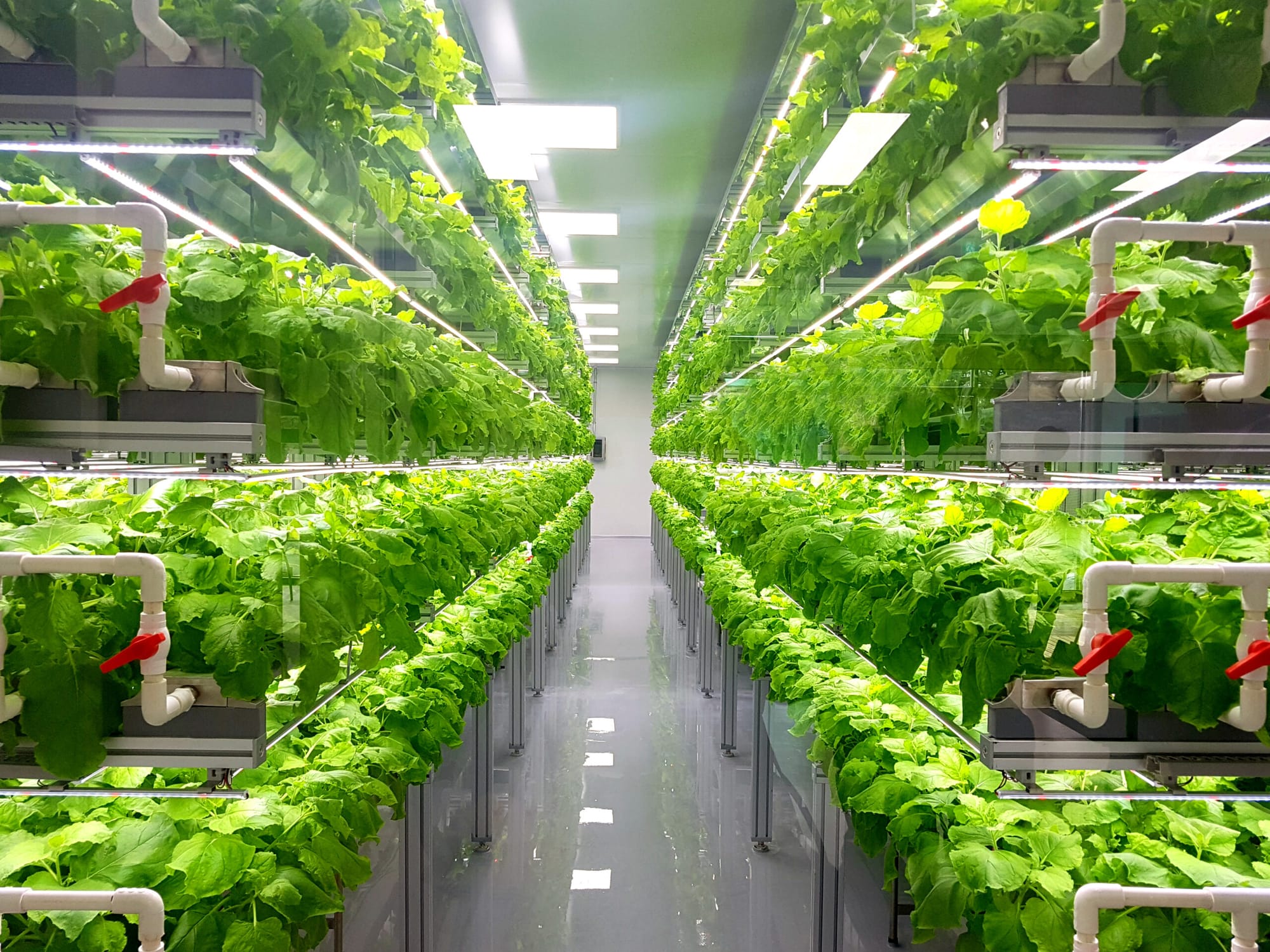
Modern indoor growing facilities are not simply greenhouses. They are highly engineered production environments where temperature, humidity, lighting and nutrient delivery are precisely managed. Production continues regardless of droughts, storms, transportation disruptions or seasonal limitations.
In strategic terms, they offer something increasingly valuable: predictability.
Just as energy infrastructure provides security against external energy shocks, controlled cultivation can provide security against disruptions in critical agricultural and botanical supply chains. It creates redundancy, resilience and domestic production capacity in sectors where dependence on imports may carry growing risks.
Importantly, this is not an argument for agricultural protectionism. It is an argument for preparedness.
Governments already recognise that some systems are too important to leave entirely to market forces. Defence capabilities, energy networks, water systems and digital infrastructure are maintained not because they are always the cheapest options, but because they provide stability during periods of uncertainty.
Food production, particularly for critical and specialised crops, may deserve similar consideration.
As Denmark develops a foreign policy increasingly centred on resilience, strategic autonomy and national preparedness, policymakers should ask whether food security belongs within the same framework.
If energy security is a pillar of national security, and defence security is a pillar of national security, then food security may be the missing third pillar.
The next crisis may not arrive in the form of military confrontation or an energy embargo. It may emerge through disrupted supply chains, climate shocks or shortages of critical agricultural inputs.
When that happens, nations with domestic production capacity will be better positioned to withstand the pressure.
The debate should therefore move beyond whether controlled indoor cultivation is simply an agricultural innovation.
The more important question is whether it should be recognised for what it increasingly represents: strategic infrastructure for a more uncertain age.
Support Sphere Magazine and Subscribe to our LINKEDIN NEWSLETTER