How Green Can Denmark Get Before It Starts Seeing Red?
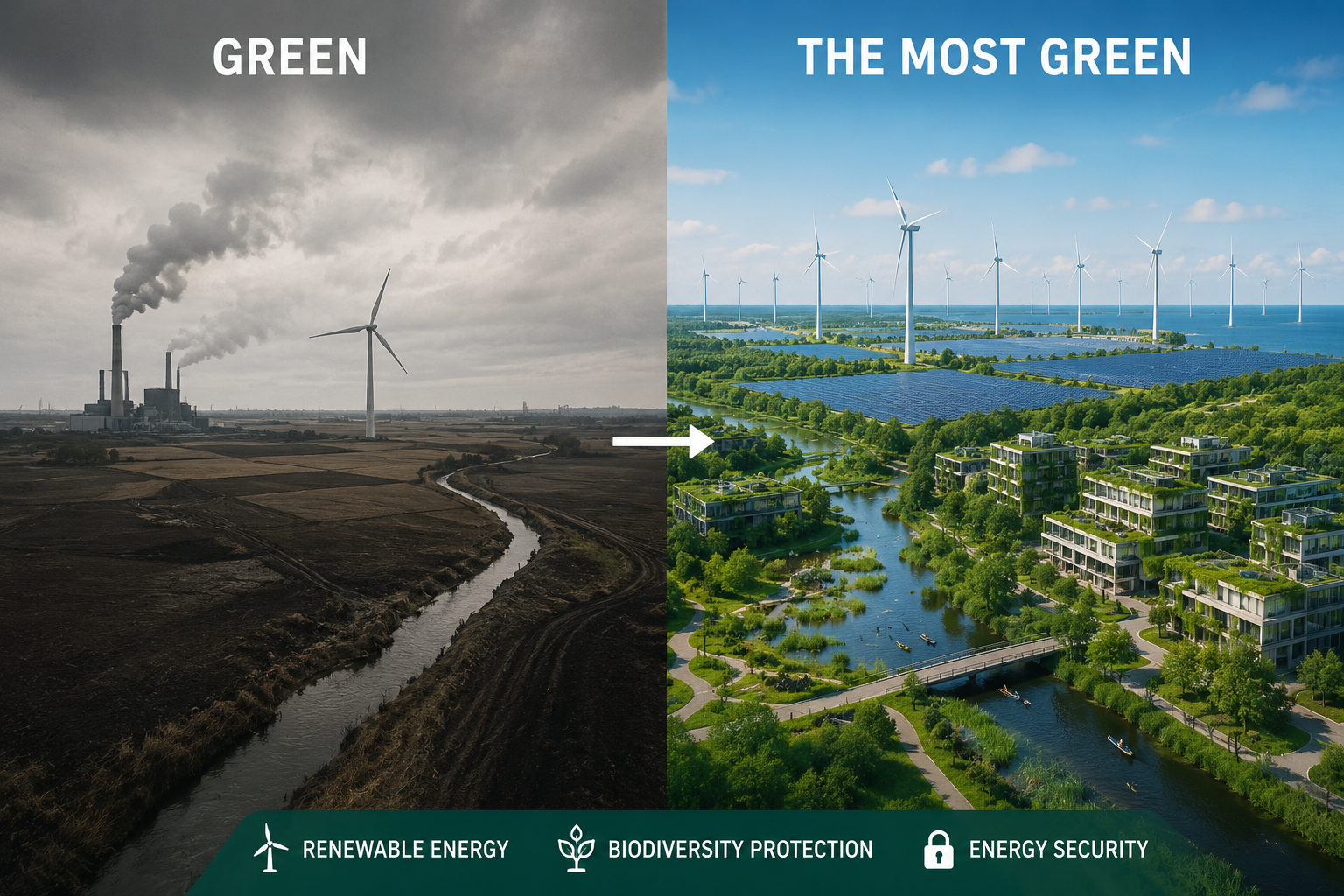
Denmark has a curious habit. No matter how green one government becomes, the next promises to be even greener.
David Williams
Only recently, politicians were celebrating the Green Tripartite Agreement as a historic breakthrough. It was hailed by supporters as one of the most ambitious environmental reforms ever attempted, with plans for a carbon tax on livestock emissions, vast new forests, restored wetlands and the largest transformation of Danish land use in modern history. Supporters called it a global model for climate legislation.
Now comes the latest pledge. According to a recent article published by State of Green, Denmark's newly formed coalition government has declared its ambition to become "the greenest government in Danish history". The announcement was made following the presentation of the new government's political programme in Copenhagen by Prime Minister Mette Frederiksen and her coalition partners.
The wording is striking. The government's own platform states that it is driven by a determination to be "the greenest government" Denmark has ever seen.
At some point, a reasonable question must be asked. How green can successive governments actually get?
This is not a criticism of cleaner air, renewable energy or protecting nature. Denmark has every reason to pursue those goals. But when every government promises to be greener than the last, the political debate risks becoming a competition in symbolism rather than a discussion about results.
We have seen this before. In December 2022, when Mette Frederiksen unveiled the previous government at Marienborg, she declared: "We are now more ambitious than we were before" as Denmark brought forward its climate neutrality target from 2050 to 2045 and introduced a series of new climate measures.
That government was presented as a significant escalation of Denmark's green ambitions.
Yet only a few years later, that level of ambition is apparently no longer enough.
Denmark already ranks among the world's most environmentally ambitious countries. It has some of the toughest climate targets, extensive renewable energy production and increasingly strict regulations on agriculture, transport and industry. Yet the political message remains remarkably consistent: whatever has already been done, more must follow.
The question is not whether green policies are good. Many clearly are. The question is whether there is a point where governments become so focused on appearing greener that they stop asking harder questions about costs, trade-offs and effectiveness. Farmers, businesses and households ultimately pay for political ambition, whether through taxes, regulations or higher prices.
There is also a danger in turning environmental policy into a race. If success is measured by who can claim the title of "greenest", then every government must outbid its predecessor. The result is a political auction where ambition itself becomes the product.
Denmark should be proud of what it has achieved. It has led the world in wind energy, climate policy and environmental innovation. But leadership is not measured by endlessly raising slogans. It is measured by delivering outcomes.
If every government must be greener than the last, Denmark may eventually discover that the colour of good policy is not always green. Sometimes it is a balance.