Europe’s Great Miscalculation: How a Continent Turned Every Power into an Adversary
By David Williams
Europe today stands in a paradox of its own making. It seeks autonomy while deepening dependence. It speaks of sovereignty while reacting to the strategic impulses of others. And most dangerously of all, it increasingly treats every major external actor, not only Russia, China, parts of the Global South, but now even segments of the United States, as threats to be managed rather than powers to be understood.
The tragedy is not merely geopolitical. It is civilizational.
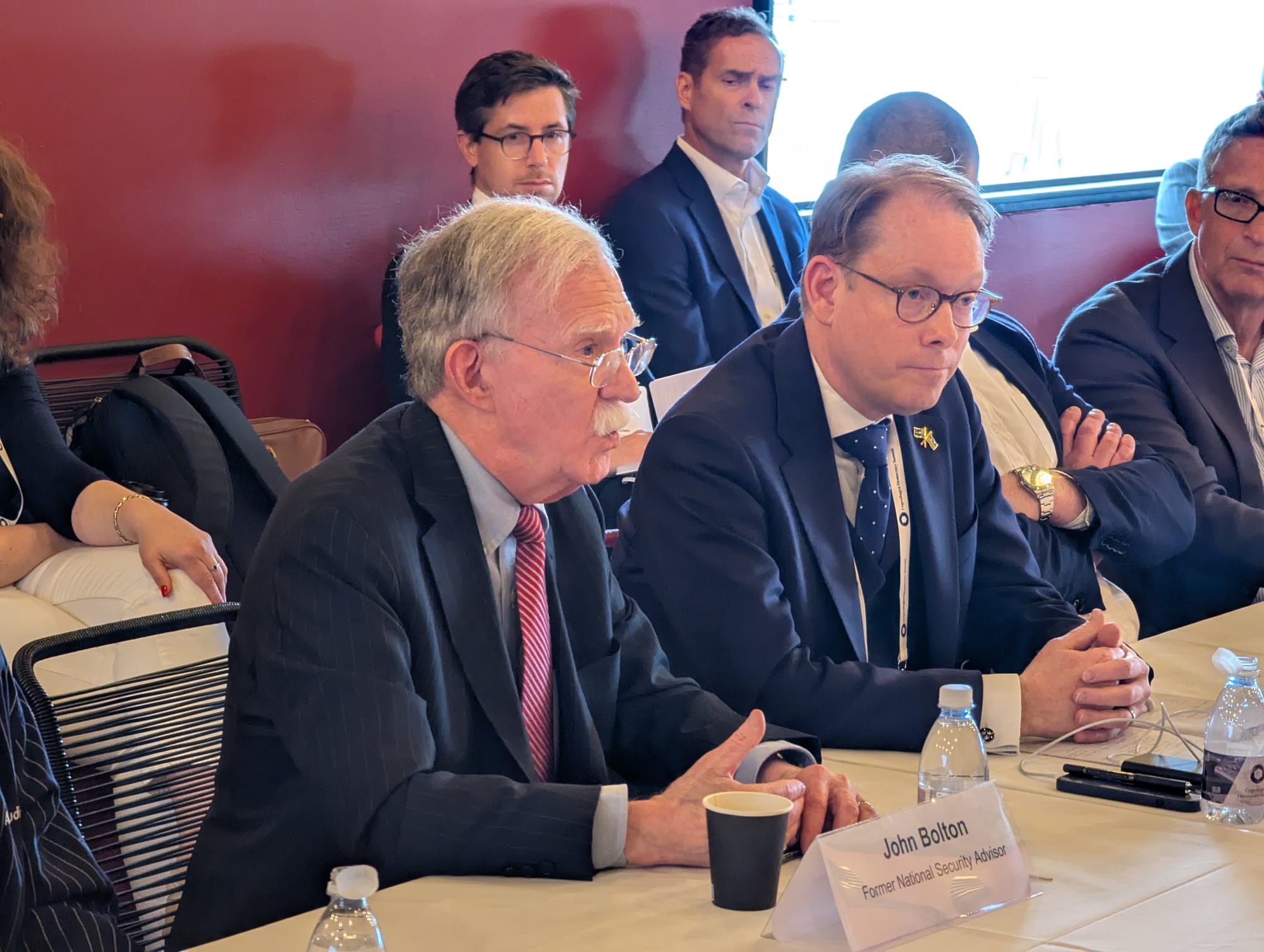
At the Alliance of Democracies Summit in Copenhagen in May 2026, former US National Security Advisor John Bolton delivered a statement that may, in retrospect, define the future of transatlantic relations more clearly than any official communiqué from Brussels:
“We have been asking Europe for years to contribute more to NATO and you did nothing. Then Trump threatens you, and you pay more. What do you think that makes us think?”
The remark was brutal precisely because it exposed an uncomfortable truth. Washington no longer sees Europe as a strategic equal, but increasingly as a reactive dependency.
Europe did not move when the partnership asked it to move. It moved only when pressure and fear forced it to act. In the eyes of many American strategists, both Republican and increasingly Democrat, this has created a dangerous new template for the future relationship between the United States and Europe: coercion works.
That realization may prove fatal for Europe’s long-term standing.
For decades, Europe assumed history had ended in its favor. It believed the post-1945 liberal order would gradually universalize European norms, European institutions, and European assumptions about economics, democracy, and security. But history did not end. It simply shifted away from Europe.
The world of 2026 is not European. It is a multipolar system driven by energy shocks, industrial competition, technological blocs, and civilizational realism. China builds. America pressures. India balances. The Gulf states leverage. Africa industrializes. Southeast Asia hedges. Meanwhile, Europe regulates, moralizes, sanctions, and reacts.
And reaction is not a strategy.
The EU’s decision in April 2026 to exclude Chinese-made solar inverters from EU-funded energy projects illustrates this perfectly. Officially, the policy is framed as a matter of cybersecurity and strategic autonomy. There are legitimate concerns: hidden communication modules, grid vulnerabilities, digital infrastructure risks, and the dangerous concentration of critical systems under one foreign supplier. Europe learned from Russian gas dependence that strategic naivety has costs.
But the deeper issue is that Europe increasingly attempts to solve every vulnerability through exclusion.Russian gas? Sever it. Chinese technology? Restrict it. American unpredictability? Hedge against it. Middle Eastern instability? Militarize around it.
The result is a continent constructing walls against the very forces that now shape the global economy.
Europe appears unable to recognize a painful but unavoidable reality: European hegemony ended over a century ago. The Second World War destroyed any illusion of a continuance of Europe’s imperial primacy. The Cold War cemented American strategic leadership. Globalization transferred industrial gravity toward Asia. Yet psychologically, much of Europe still behaves as though it remains the organizing center of the world system.
It is not.
And because it cannot fully accept this decline, Europe increasingly interprets global change itself as a threat.
This is why the current strategy is so dangerous. Europe is simultaneously alienating and threatening Russia, confronting China, depending on American military protection, competing with American industrial subsidies, and mistrusting emerging powers that increasingly view Brussels as paternalistic and economically self-interested.
A continent of 450 million people cannot sustain a posture of strategic hostility toward nearly every major power center on earth.
Especially not while economically stagnant, demographically aging, militarily fragmented, and energy vulnerable.
The wolf is no longer at the door. The wolf is already inside the house.
And Europe’s greatest weakness is that it still believes there is time.
There may not be.
The response to every crisis since 2008 has followed the same pattern. Europe reacts too late, too cautiously, too bureaucratically, and only once the damage is irreversible. The Euro crisis. Migration. Russian energy dependence. Industrial competitiveness. Defense spending. Artificial intelligence. Semiconductor production. Energy autonomy.
In every case, Europe waited until events forced adaptation.
Now the same pattern is emerging geopolitically.
Europe still believes it can preserve the old order through regulation, sanctions, and strategic distancing. But the rest of the world is no longer waiting for European approval. It is reorganizing itself through hard power, industrial policy, energy leverage, resource nationalism, and technological ecosystems.
The uncomfortable truth is that Europe cannot sanction its way back to relevance.
Nor can it moralize itself into geopolitical centrality.
What Europe needs now is not another defensive doctrine, but a psychological transformation.
It must accept that multipolarity is not temporary. It must accept that Western dominance is no longer the default condition of history. It must accept that cooperation with powers it dislikes will be necessary for survival. And above all, it must stop confusing strategic autonomy with strategic isolation.
The irony is profound. In trying to free itself from dependency, Europe risks isolating itself from the very economic and technological systems that will define the 21st century.
China, for example, is not merely a rival. It is also the engine of global green industrialization. Chinese manufacturing has driven down solar costs worldwide and accelerated renewable deployment faster than any Western program. To completely sever Europe from this momentum in the name of security may ultimately undermine the very climate transition Europe claims is existential.
This does not mean Europe should surrender its security concerns. It means Europe must become more sophisticated.
Instead of bans and panic-driven decoupling, Europe could pursue sovereign cloud infrastructures, European-controlled firmware layers, aggressive hardware auditing, and strategic technological compartmentalization. Real resilience is built through intelligent systems design, not through blanket exclusion born of geopolitical fear.
Because fear is now driving too much of European policy.Fear of Russia. Fear of China. Fear of Trump. Fear of migration. Fear of deindustrialization. Fear of irrelevance.
But civilizations governed primarily by fear eventually lose the ability to shape history.
Europe still possesses enormous strengths: scientific excellence, institutional stability, industrial know-how, cultural influence, and a highly educated population. But these strengths can only matter if Europe abandons the illusion that the old Atlantic-centered order can simply be preserved indefinitely.
John Bolton’s remark in Copenhagen may ultimately matter because it revealed what America increasingly believes: Europe only moves when threatened.
And once allies begin to think coercion is the only language you understand, the relationship has already fundamentally changed.
Europe must therefore find a new way.
A way based not on nostalgia for lost dominance, but on intelligent adaptation to a transformed world.
A way that recognizes cooperation is no longer weakness. A way that understands technological interdependence is unavoidable.
A way that accepts the future will not belong exclusively to Washington, Brussels, or Beijing, but to those capable of navigating between them.
The 21st century will not be governed by empires of ideological purity. It will belong to civilizations capable of coexistence amid competition.
Europe’s task is therefore no longer to lead the world as it once did.
Its task is something far harder:
To remain relevant in a world it no longer controls.