Europe's Drone Nervous System: Denmark's Kyiv Deal Signals a Quiet Transfer of Military Power
By David A. Williams
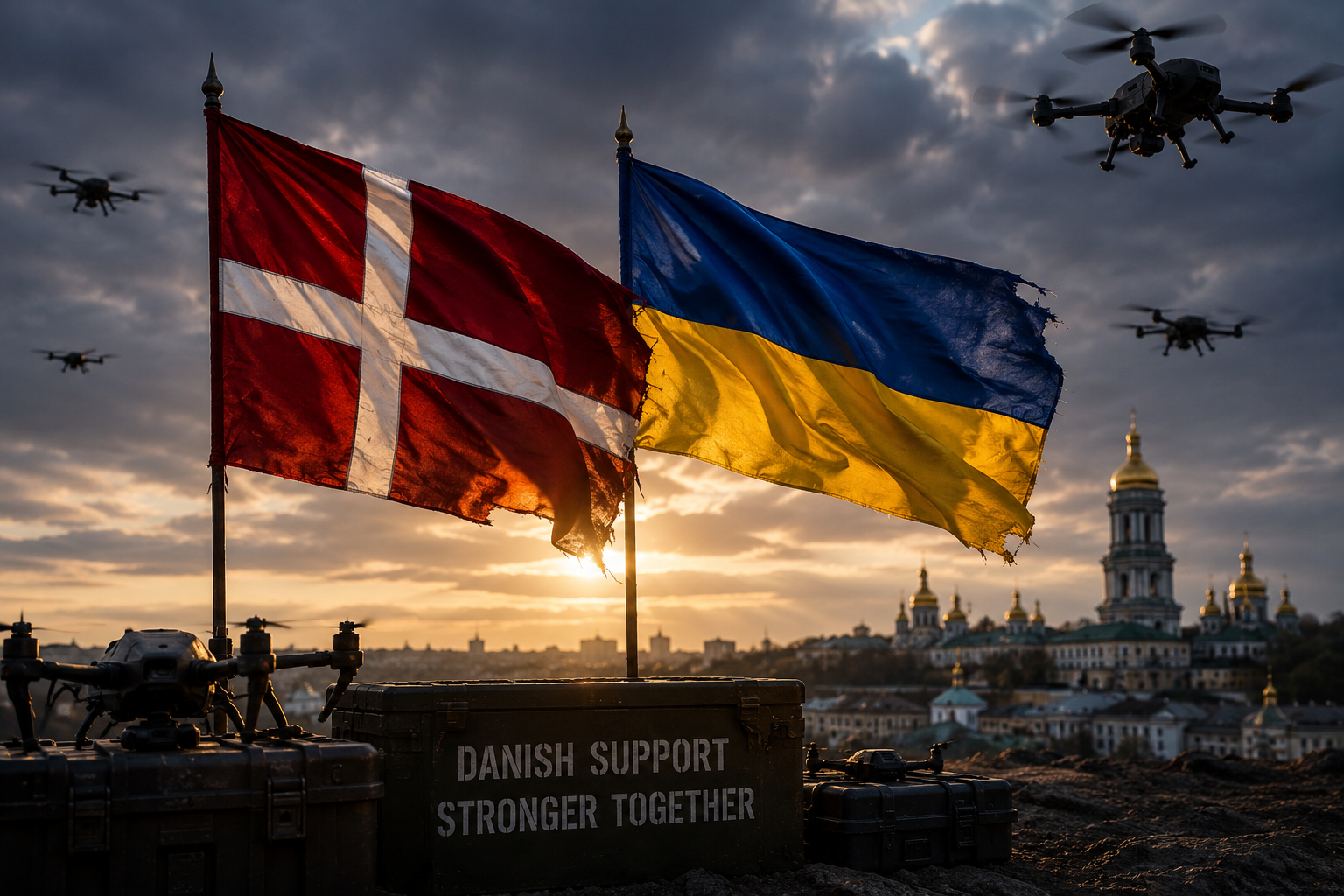
This week in Kyiv, Ukrainian President Volodymyr Zelenskyy met Danish Defense Minister Jeppe Bruus to advance negotiations on a bilateral drone agreement alongside a new Danish military aid package. The reporting, including United24 Media and Ukrainian official communications, frames it as part of a broader escalation in defense cooperation rather than a standalone diplomatic visit. That framing is accurate, but still oddly cautious for what is actually unfolding beneath it.
Because what is taking shape is not simply another round of aid commitments. It is a structural alignment between a frontline war economy and a small but strategically agile NATO state that has learned how to move faster than most of its peers. Denmark is not behaving like a distant supporter anymore. It is acting like a participant in a shared defense production system that is being built in real time, under fire, in Ukraine.
The emphasis on drones is not incidental. It is the center of gravity. Ukraine has become the most intense live environment for drone warfare in the world, where design cycles collapse from years into weeks, and battlefield feedback loops are immediate, brutal, and unforgiving.
According to reporting from United24 Media, the discussions in Kyiv included expanding military cooperation alongside the impending drone agreement, reinforcing that this is not a procurement deal but a technological partnership embedded in ongoing war conditions.
That distinction matters more than officials tend to admit. Traditional defense relationships assume a stable producer and a dependent recipient. This model is dissolving. Ukraine is simultaneously a recipient, innovator, and exporter of tactical knowledge. Denmark, unusually for a NATO member of its size, appears willing to acknowledge that reality rather than preserve the fiction that expertise flows in only one direction.
There is a political risk hidden inside this evolution. The more European states integrate Ukrainian battlefield innovation into their own defense structures, the harder it becomes to treat the war as geographically contained. The knowledge does not stay in Ukraine. It moves outward through procurement, training, co-production, and shared systems. In other words, Europe is not only supporting Ukraine's war effort. It is beginning to absorb its methods.
This is where the debate becomes uncomfortable. Supporters of deeper integration argue that Ukraine is providing Europe with the most advanced real-world understanding of modern warfare available anywhere, particularly in drone deployment, electronic warfare, and rapid iteration under combat pressure. Critics counter that this risks locking Europe into a permanent escalation loop, where every technological improvement raises the baseline of conflict rather than closing it.
Both arguments carry weight, but neither resolves the central tension. Europe is no longer observing this war from a distance. It is learning from it in real time and in some cases, building its future defense posture directly through it. Denmark's role is instructive precisely because it is not a superpower. It is a state that has chosen speed, flexibility, and direct engagement over institutional caution.
That raises a more unsettling question. If Ukraine is becoming Europe's most advanced defense laboratory, what happens when the experiment does not end? Drone warfare is not a transitional phase anymore. It is becoming the architecture of modern conflict. And partnerships like this one suggest that Europe is already reorganizing itself around that reality, whether it has fully debated the consequences or not.
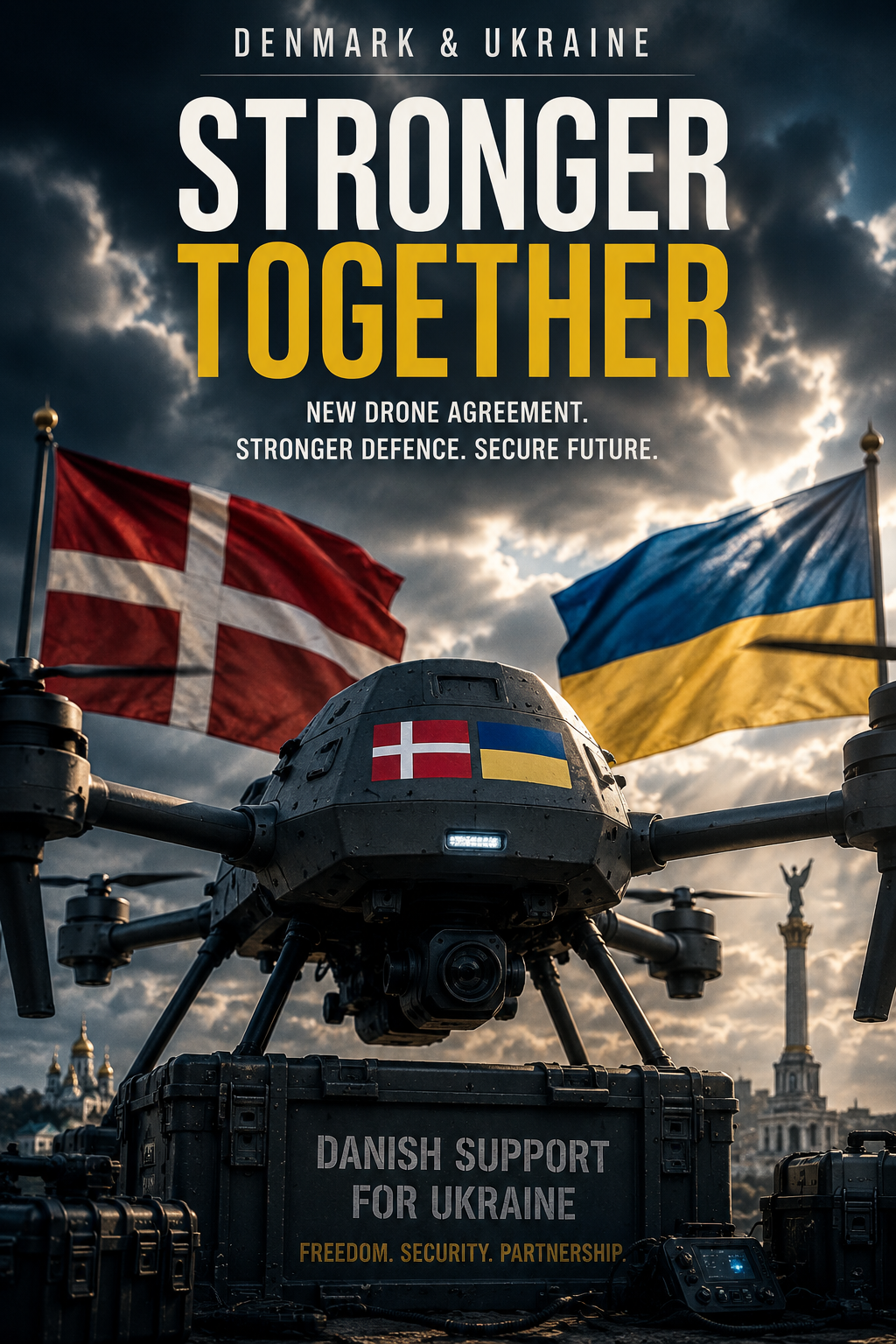
So the meeting this week in Kyiv is not just another diplomatic checkpoint. It is a signal that Europe's defense future is being co-written in a war zone, with Denmark acting less like a bystander and more like an early adopter of a system that is still being invented.