Commentary: The Hidden Supply Chain Behind Europe’s Drone Revolution
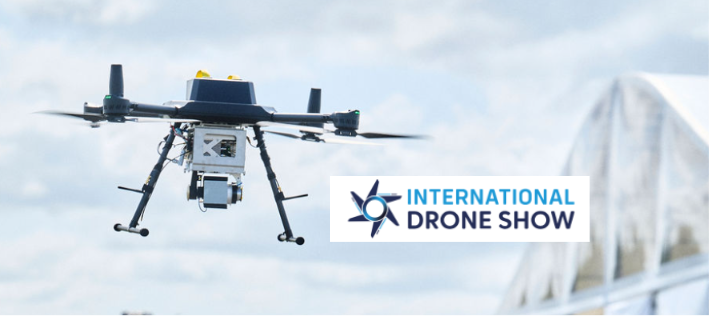
Odense's International Drone Show Showcased the Future of Warfare. But Where Does That Future Come From?
By David Williams
Walking through the International Drone Show in Odense on 3–4 June, I was struck by the extraordinary sophistication of the machines on display.
Sleek, fast, increasingly autonomous, and engineered with remarkable ingenuity, the latest generation of drones demonstrated how rapidly the industry is evolving.
Many of the exhibitors presented systems capable of surveillance, reconnaissance, logistics, and, increasingly, military applications. Some of the latest combat drones were displayed with obvious pride: lightweight airframes, advanced navigation systems, sophisticated communications equipment, and ever-greater operational ranges.
The technology was impressive.
Yet as I moved from stand to stand, a different question kept returning to my mind: How are these drones actually made?
Not how they fly. Not how fast they are. Not how effectively they can identify targets.
But where do the components come from?
And equally important: what is the environmental cost of producing them?
Modern drones rely heavily on lithium batteries, rare earth minerals, semiconductors, sensors, cameras, motors, and advanced communications equipment. The industry's marketing often focuses on innovation, efficiency, and battlefield effectiveness, but discussions about sourcing, manufacturing, and disposal seemed noticeably less forthcoming.
Whenever I asked exhibitors about environmental sustainability, battery recycling, or the origin of critical components, the conversation often shifted elsewhere.
What happens to the lithium batteries once they reach the end of their operational life?
How much energy is consumed in producing these systems?
What environmental standards govern the extraction of the materials required to build them?
These are not anti-drone questions. They are simply questions that any modern industry should be prepared to answer.
One exhibitor from the United Kingdom was refreshingly candid.
According to him, many drone manufacturers source components wherever they are cheapest rather than making significant investments in European suppliers. Cost pressures, competition, and the need to scale production quickly often outweigh concerns about building a fully European supply chain.
That observation raised further questions.
If Europe speaks increasingly about technological sovereignty and strategic independence, why does so much of the industry continue to depend on components manufactured elsewhere?
During a presentation for international journalists by Vyacheslav Shvydak, founder and CEO of Dropla Tech in Ukraine, I asked about the origins of the materials and components used in his company's drones. He responded that many components were European, but that obtaining rare earth materials remained a necessity, so they had to deal with China.
This answer was understandable. Rare earth elements are essential to modern technology. Yet it also highlights a broader reality: even Europe's most innovative drone manufacturers remain dependent on global supply chains that extend far beyond the continent.
And this leads to an even larger question.
Where does the money go?
As the drone industry expands, governments, investors, taxpayers, and defence ministries are pouring enormous sums into the sector. For Ukrainian companies in particular, public sympathy and political support across Europe have opened significant opportunities for investment and procurement.
But who ultimately benefits financially?
Does the revenue primarily strengthen Ukraine's state capacity and defence effort?
Does it flow to private investors?
How much returns to foreign suppliers providing the components?
And how much ends up supporting manufacturing ecosystems outside Europe altogether?
There is also a geopolitical contradiction that deserves honest discussion.
European citizens are frequently encouraged to reduce economic dependence on Russia. Governments have imposed sanctions, limited imports, and accepted higher energy costs in pursuit of broader strategic objectives. Even indirect purchases through third countries have become politically controversial.
At the same time, many advanced technologies depend heavily on Chinese supply chains, whether through batteries, electronics, rare earth processing, or other critical components.
The reality may simply be that necessity dictates policy. If manufacturers need certain minerals, batteries, or components to build drones, they will buy them where they are available.
But if that is the case, then the public deserves transparency.
If strategic dependence on one geopolitical rival is unacceptable, why is dependence on another often treated differently?
If European taxpayers are financing large parts of the continent's growing defence and drone sectors, they have a legitimate interest in understanding where the supply chains begin, where the profits end, and who ultimately benefits.
The International Drone Show demonstrated that Europe possesses remarkable engineering talent and entrepreneurial ambition. What it did not fully reveal was the complex global network of minerals, factories, investors, and political interests that make these technological achievements possible.
The drones were easy to see.
The supply chains behind them were far harder to find.
Support Sphere Magazine and subscribe to the FREE LinkedIn Newsletter