Can Killer Drones Ever Be Sustainable?
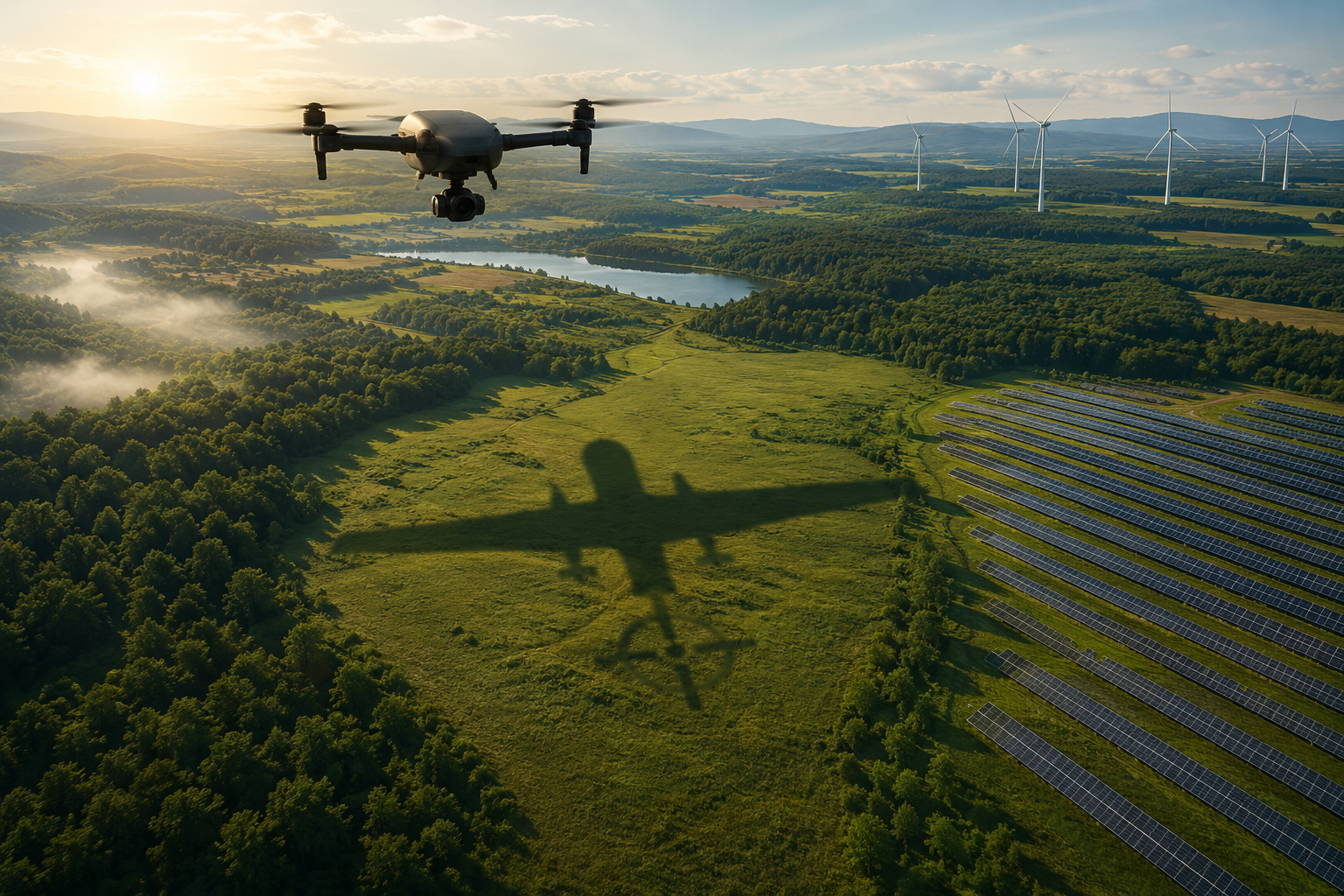
The uncomfortable question at the intersection of green technology, artificial intelligence and modern warfare
David Williams
At first glance, the question sounds ridiculous. Sustainability is associated with wind farms, electric vehicles and reforestation projects. Killer drones belong to the world of warfare. Yet as governments push for greener technologies across every sector, including defence, the idea is being discussed with increasing seriousness.
Drones have already transformed civilian environmental work. They monitor wildlife, map forests, detect methane leaks and help scientists track the effects of climate change. In agriculture, they can reduce the need for pesticides and fertilisers by targeting applications with pinpoint accuracy. Compared with helicopters or manned aircraft, drones often consume less energy and cost less to operate.
The Environmental Argument
The military has noticed the same advantages. Small drones require fewer resources than fighter aircraft, tanks or large surveillance platforms. Some are battery-powered. Others consume only a fraction of the fuel used by conventional military equipment. In theory, drones can carry out reconnaissance missions, monitor borders and even conduct precision strikes while reducing fuel consumption and logistical demands.
From a purely environmental perspective, that sounds like progress.
The problem is that sustainability is about more than carbon emissions.
Every military drone contains metals, semiconductors and batteries that require mining, manufacturing and global supply chains.
Lithium, cobalt and rare earth elements all carry environmental costs. Modern conflicts have also revealed how disposable drones have become. In Ukraine, both sides have deployed vast numbers of relatively cheap drones, many of which are destroyed after a single mission. Unlike a fighter aircraft that may remain in service for decades, some drones survive only days or even hours before becoming electronic waste.
Can Drones Make War Cleaner?
Supporters argue that drones can reduce casualties and limit damage. A precision drone strike may avoid the wider destruction associated with artillery barrages or air raids. Some researchers believe artificial intelligence could eventually improve decision-making on the battlefield.
Professor Toby Walsh, one of Australia's leading artificial intelligence experts, has noted that advocates of autonomous weapons often claim that "robots can be more ethical" because they do not act out of fear, anger or revenge. Walsh discussed the argument in interviews and writings examining the future of AI and warfare. The idea is controversial, but it raises an important point.
Machines do not panic. They do not seek revenge. In theory, they might make fewer mistakes than stressed human soldiers.
Military planners also point out that drones can gather intelligence without putting troops directly in harm's way. If fewer soldiers are killed and less infrastructure is destroyed, some argue that drones represent a more restrained form of warfare.
The Accountability Problem
Critics remain unconvinced.
Professor Stuart Russell of the University of California, Berkeley, one of the world's most respected AI researchers, has been one of the strongest voices warning against autonomous weapons. In a Berkeley News interview, he argued that such systems "could violate fundamental principles of human dignity by allowing machines to choose whom to kill."
That concern lies at the heart of the debate. Human societies have always expected someone to be accountable when lethal force is used. Once software is allowed to identify and attack targets without meaningful human oversight, accountability becomes blurred.
Who is responsible when an autonomous drone makes a mistake? The commander who deployed it? The programmer who designed it? The company that built it? The answer is far from clear.
Does Cheaper Warfare Mean More Warfare?
There is another concern. Cheaper warfare can become more attractive warfare.
The cost of military intervention has often acted as a brake on conflict. If nations can deploy autonomous systems instead of risking soldiers, political leaders may find military action easier to justify. Geoffrey Hinton, often referred to as one of the godfathers of artificial intelligence, warned in a 2025 interview with Business Insider that autonomous weapons could lower the barriers to war because governments would face fewer human losses.
History suggests that when technologies make activities cheaper and easier, they tend to be used more often. Critics fear the same principle could apply to autonomous weapons.
The United Nations Steps In
The United Nations has become increasingly vocal on the issue. UN Secretary-General António Guterres has repeatedly called for international restrictions on fully autonomous weapons. In a statement released by the United Nations in 2025, he described machines capable of taking human lives without human control as "politically unacceptable" and "morally repugnant", arguing that they should be prohibited under international law.
His comments reflect growing concern among diplomats, ethicists and human rights organisations that autonomous weapons could outpace the laws designed to regulate them.
So, Can Killer Drones Be Sustainable?
The environmental case for military drones is relatively straightforward. They can use less fuel, require fewer personnel and often perform tasks more efficiently than traditional military platforms.
The ethical case is far less clear.
A solar-powered drone with recyclable batteries might have a smaller carbon footprint than a fighter jet. That does not automatically make it sustainable. Sustainability is not simply about reducing emissions. It is also about building societies that are stable, accountable and humane.
The real challenge is not whether killer drones can be made greener. Engineers will almost certainly achieve that. The harder question is whether any technology that removes human judgement from life-and-death decisions can ever fit comfortably within the broader meaning of sustainability. That is a debate that environmentalists, technologists and policymakers are only beginning to confront.
Subscribe to the LinkedIn Newsletter, Sphere Magazine