April 2026

Sphere - Danish News Briefing — 19 April 2026
Political
Coalition negotiations remain deadlocked as Frederiksen pursues parallel tracks toward both a centrist and left-leaning government.
Publication: Omni (citing reporting and analysis from Politiken and TV2)
Government formation talks are expected to extend for weeks amid unresolved policy divisions and geopolitical pressure.
Publication: Bloomberg
The post-election stalemate continues with no bloc holding a majority, leaving centrist parties in a decisive kingmaker position.
Publication: Associated Press
Context: Nearly four weeks after the March election, negotiations remain fluid, with Prime Minister Mette Frederiksen simultaneously exploring a broad centrist coalition and a traditional left bloc—an approach widely interpreted as an attempt to maximise leverage rather than signal a clear governing direction.
Economic
Economic policy disagreements—particularly over taxation and agricultural regulation—continue to complicate coalition negotiations.
Publication: Reuters (contextual reporting on negotiations and policy divides)
Context: Fiscal policy—especially proposals such as wealth taxes and environmental regulation—remains a core fault line between centre-left and centre-right parties, directly impacting the viability of any governing coalition.
Diplomatic
Ongoing tensions related to Greenland and international security considerations are adding urgency to Denmark’s prolonged coalition talks.
Publication: Bloomberg
Context: External pressure—particularly linked to Arctic geopolitics—has elevated the stakes of forming a stable Danish government, reinforcing the perception that domestic paralysis carries international consequences.
International
Denmark’s political situation continues to draw international scrutiny following a fragmented election and uncertain leadership outlook.
Publication: Associated Press
Analysis suggests Denmark’s political leadership is attempting to balance domestic fragmentation with its increasingly prominent international role.
Publication: Le Monde
Sphere - Danish News Briefing — 18 April 2026
Political
Coalition negotiations remain unresolved following the 24 March election, with centrist parties holding decisive leverage and competing visions for either a broad centrist coalition or a traditional bloc government.
Publication: Courthouse News Service
Centrist strategy dominates ongoing negotiations
Summary: Moderates leader Lars Løkke Rasmussen continues to push for a cross-bloc centrist government, conditioning talks on inclusion of both left- and right-wing parties and effectively blocking a purely left-wing coalition.
Publication: Wikipedia (compiled from multiple cited reports)
Stakeholders seek influence over coalition agenda
Summary: A coalition of 27 rights-holder organisations has formally intervened in government negotiations, urging stronger protections around artificial intelligence and copyright.
Publication: Bech-Bruun (legal analysis / policy brief)
Analysis: Danish political model strained by election outcome
Summary: Commentators argue the fragmented election result has created structural pressure toward another centrist government despite voter dissatisfaction with such arrangements.
Publication: The Guardian (analysis by Information editor Rune Lykkeberg)
Economic
Economic policy divides complicate coalition talks
Summary: Disagreements over fiscal policy—particularly taxation and spending priorities—are a central obstacle in coalition negotiations, contributing to stalled government formation.
Publication: Wikipedia (election reporting synthesis)
International
External pressure on Greenland shapes Denmark’s political agenda
Summary: Continued geopolitical tension over Greenland, including U.S. interest in the territory, remains a key external factor influencing Danish political discourse and coalition priorities.
Publication: ABC News
Key Takeaways (18 April 2026)
Denmark remains without a new government nearly a month after the election, reflecting a highly fragmented parliament.
The Moderates party is the निर्णing actor, pushing for a broad centrist coalition that cuts across traditional blocs.
Economic disagreements and bloc incompatibilities are the main barriers to agreement.
Sphere Magazine: A Media Manifesto
Sphere - Danish News Briefing — 16 April 2026
Political
Centrist Moderates continue to hold decisive “kingmaker” position as talks explore cross-bloc coalition options.
Lars Løkke Rasmussen (M) pushes for broad centrist coalition spanning red and blue blocs, rejecting reliance on far-left support.
Prime Minister Mette Frederiksen (S) continues parallel negotiation tracks with both centre-left and centre-right parties amid stalemate.
Analytical note:
As of 17 April, the central political reality is strategic ambiguity: Frederiksen remains formateur, but Rasmussen’s insistence on a centrist coalition has effectively blocked a purely left-wing government, prolonging negotiations and increasing the likelihood of an unprecedented broad coalition.
Economic
Business leaders warn prolonged coalition talks risk delaying fiscal planning and defence spending commitments.
Uncertainty over economic policy direction persists as competing coalition models propose divergent tax and spending frameworks
Analytical note:
Economic coverage centres on policy paralysis risk: without a government, key decisions on defence funding, inflation response, and labour market reforms remain pending.
Pharmaceutical / Health
Hospitals and regional authorities raise concerns over staffing pressures and funding clarity pending new government agreement.
Debate continues over long-term healthcare reform financing amid political uncertainty.
Analytical note:
Healthcare reporting is tightly linked to coalition talks, with structural reform effectively paused until a governing majority is secured.
Diplomatic
Greenland remains central to coalition discussions as parties weigh foreign policy and defence posture toward the United States.
Danish parties diverge on how strongly to align with EU defence initiatives and NATO commitments.
Analytical note:
Foreign policy—traditionally consensus-driven in Denmark—has become a fault line in coalition talks, particularly regarding Arctic security.
International
International
Denmark’s protracted coalition negotiations are closely watched across Europe as a test of centrist governance models.
European partners express concern that delays in Copenhagen could affect defence coordination and EU policy alignment.
Analytical note:
International coverage frames Denmark as a case study in fragmented electorates, with implications for coalition politics across Europe.
Political
Danish political model under strain following election outcome
International commentary highlights Denmark’s increasingly fragmented political system, where centrist parties hold disproportionate influence, complicating traditional bloc governance.
Publication: The Guardian
Coalition talks stall amid widening demands
Moderate leader Lars Løkke Rasmussen warned that a new Danish government is unlikely to be formed for at least another month as he insists broader centre-right participation is required before negotiations can proceed.
Publication: The Local Denmark
Frederiksen pursues a dual-track strategy in negotiations
Prime Minister Mette Frederiksen is simultaneously exploring a centrist coalition with Venstre and Moderates while keeping open the option of a left-leaning government, underscoring strategic ambiguity at a critical stage of talks.
Publication: Omni (citing analysis from Politiken and TV2)
Prospects for a centrist government remain uncertain
Political analysts note that while negotiations toward a broad centrist coalition have begun, public scepticism and prior failed attempts raise doubts about whether such a government is viable.
Publication: Politiken
Structural deadlock defines post-election landscape
The fragmented parliamentary outcome—where neither left nor right blocs hold a majority—continues to complicate coalition formation, with kingmaker dynamics intensifying bargaining complexity.
Publication: Euronews (background context)
Diplomatic
Greenland reshuffles foreign policy leadership amid geopolitical pressure
Greenland appointed former prime minister Múte Egede as foreign minister, consolidating control over external relations as tensions with the United States over strategic influence intensify.
Publication: Reuters
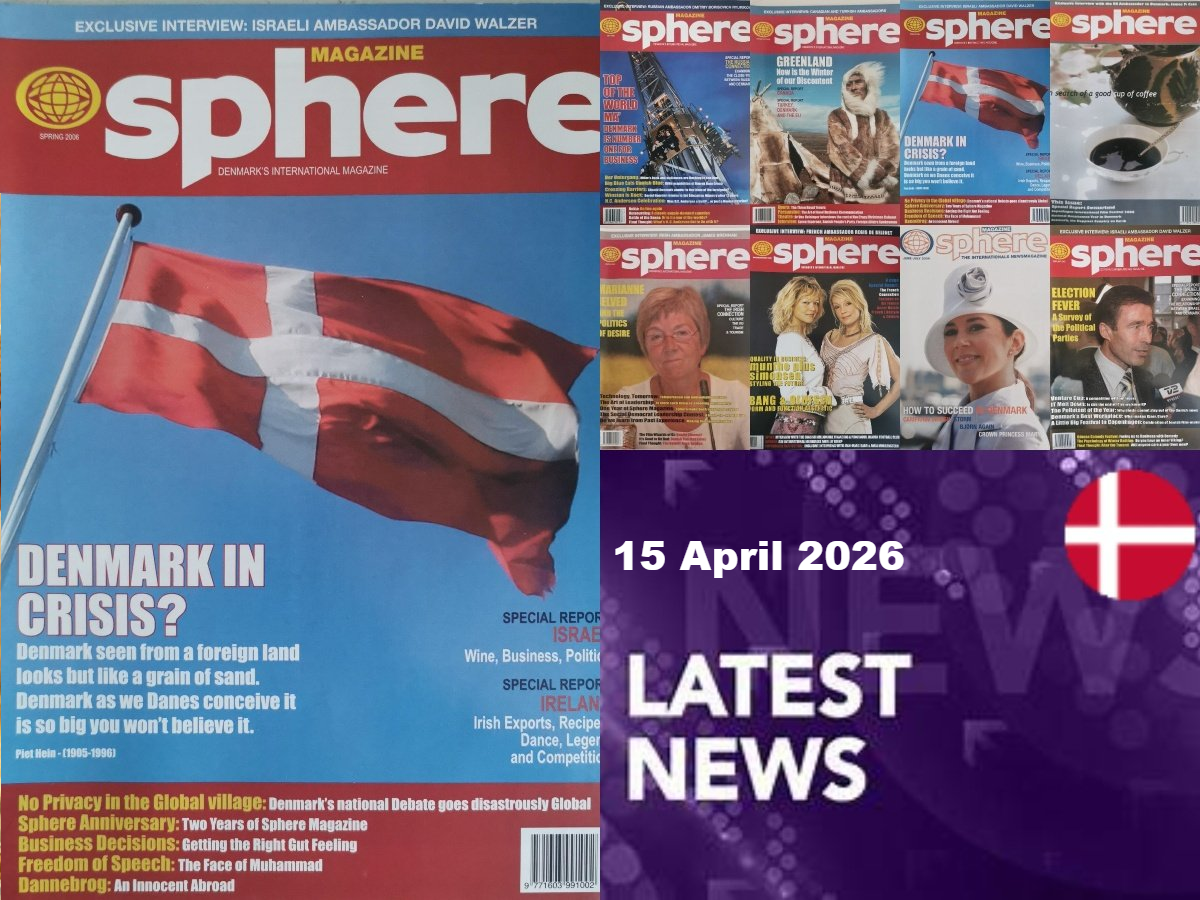
SPECIAL REPORT: Ink in the Cocoon: The Slow Death and Strange Rebirth of Journalism
Sphere magazine examines the observable collapse of the traditional newspaper industry, burdened by outdated structures, declining trust, and a refusal to adapt truly.
Sphere - Danish News Briefing — 15 April 2026
Political
Lars Løkke Rasmussen pressures Frederiksen to pivot rightward in coalition talks — Omni (citing analysis from Politiken, DR, Berlingske)
Political analysts agree that Rasmussen is currently steering the process, using his pivotal position to push for a broad centrist coalition spanning traditional blocs.
Frederiksen pursues dual-track strategy amid uncertain coalition prospects — Omni (analysis referencing Politiken and TV2)
→ The prime minister is simultaneously exploring both a centrist coalition and a left-leaning alternative, reflecting deep uncertainty about which path can secure a majority.
Economic
→ Disputes over taxation, public spending, and labour-market reforms remain core obstacles, particularly between left-wing parties and the centre-right bloc Rasmussen wants included.
Key economic takeaway
The negotiations are not merely arithmetic but hinge on structural policy divides, especially fiscal policy and welfare priorities, which complicate any cross-bloc agreement.
Diplomatic
→ Rasmussen’s role as foreign minister and experienced statesman reinforces his authority in negotiations, enhancing his ability to dictate coalition terms.
Key diplomatic takeaway
Denmark’s coalition talks are indirectly shaped by foreign policy credibility, with Rasmussen leveraging his international stature to reinforce his domestic bargaining power.
International
Denmark faces prolonged coalition uncertainty after fragmented election — International reporting context (background)
(e.g. major international coverage of Danish election aftermath)
→ With no bloc holding a majority, Denmark is expected to undergo extended negotiations, with cross-bloc cooperation increasingly seen as necessary.
Key international takeaway
Denmark is viewed abroad as entering a prolonged and complex coalition phase, with its traditionally stable system now dependent on centrist compromise.
Focus: What Lars Løkke Rasmussen Is Doing
Across all credible reporting, Rasmussen’s strategy is consistent and deliberate:
He has paused centre-left negotiations and labelled them politically untenable.
He is forcing Frederiksen to negotiate with right-wing parties as a precondition for progress.
He is positioning himself as architect of a “government across the middle”, combining red and blue blocs.
He retains flexibility to revert to a left-leaning option if centre negotiations fail, maintaining leverage over all sides.
Bottom line: Rasmussen is not merely participating—he is actively redesigning the coalition landscape, using his kingmaker status to push Denmark toward a structurally new centrist governing model.
Sphere - Danish News Briefing — 14 April 2026
Political
Lars Løkke Rasmussen has effectively forced Social Democrat Leader Mette Frederiksen to pivot toward cross-bloc talks by refusing further negotiations unless right-wing parties are included.
Publication: Omni (citing Politiken, DR, Berlingske analysis)
Danish political analysts assess that Løkke Rasmussen is currently dictating the pace and direction of coalition talks, leveraging his kingmaker position to push for a centre-based government spanning both blocs.
Publication: Omni (analysis citing DR and Berlingske commentators)
Interpretation for April 14:
The day’s reporting confirms a decisive shift: the negotiation centre of gravity has moved from Frederiksen to Løkke Rasmussen, whose strategy is to force a structurally new government “across the middle” rather than allow a traditional red-bloc coalition. His leverage rests on three tactics visible in coverage:
1) Blocking a Red–Green dependent government.
2) Issuing ultimatums tying participation to inclusion of Venstre and Conservatives.
3) Applying pressure symmetrically to both left and right to accept compromise.
Economic
Disagreements over economic policy—particularly regarding cooperation with the Red-Green Alliance—remain a central obstacle, with Løkke Rasmussen calling such arrangements “irresponsible.”
Publication: Reflected in multiple Danish political reports (aggregated context)
Interpretation:
Economic policy is not peripheral—it is the primary veto point used by the Moderates to exclude certain coalition configurations, especially those dependent on left-wing fiscal agendas.
Diplomatic
The earlier Greenland dispute with the United States continues to influence Danish political dynamics and leadership positioning, particularly strengthening Løkke Rasmussen’s profile as a foreign policy actor.
Publication: Context referenced in ongoing political reporting
International
International coverage continues to highlight Denmark’s unusually fragmented election outcome, with cross-bloc cooperation now seen as structurally necessary rather than optional.
Publication: Reflected in European political reporting and analyses
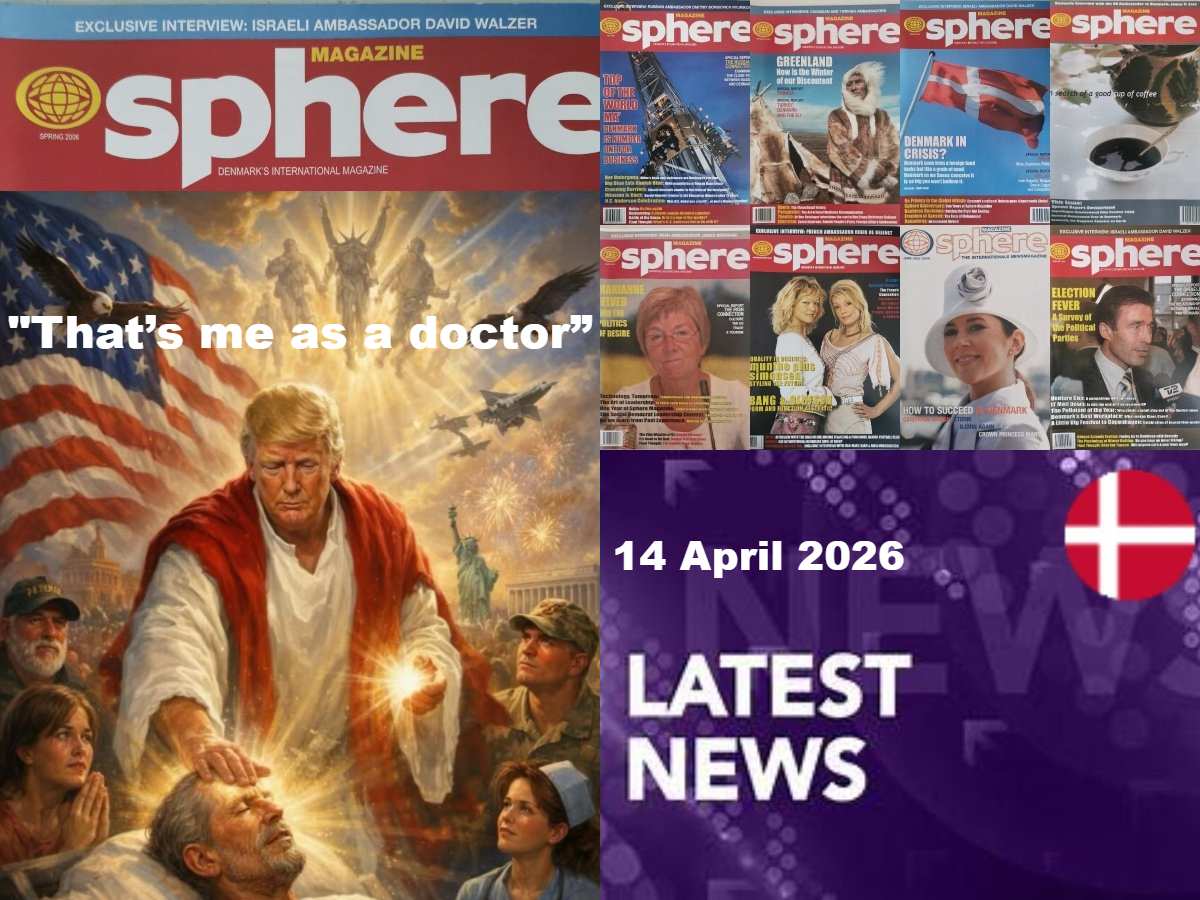
Sphere Magazine: Trump AI “Christ” Image Triggers Political Outrage
Sphere - Danish News Briefing — 13 April 2026
Political
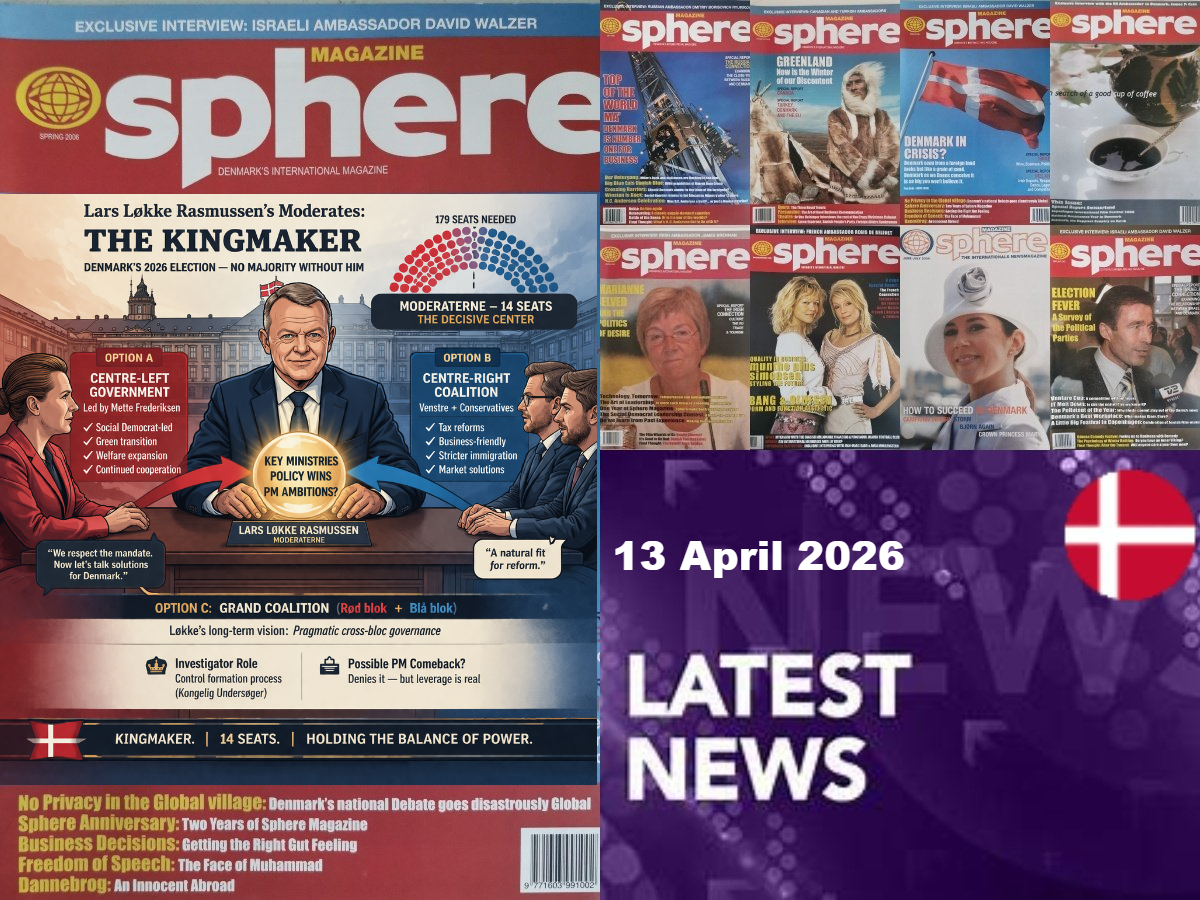
Government formation and Løkke Rasmussen’s role dominate coverage.
“Frederiksen balances between bloc options as negotiations open” — Politiken (analysis)
Summary: Prime Minister Mette Frederiksen has opened negotiations toward both a centrist and left-leaning coalition, reflecting strategic ambiguity amid uncertain parliamentary arithmetic.
URL: https://politiken.dk
“Løkke demands shift to right in coalition talks” — Berlingske (analysis)
Summary: Lars Løkke Rasmussen has issued an ultimatum that negotiations must include right-wing parties, positioning himself as the निर्णing actor in forcing a broad centrist government.
URL: https://www.berlingske.dk
“Pressure mounts after Løkke’s strategic intervention” — DR / Politiken / Berlingske (multi-outlet analysis)
Summary: Analysts across major Danish outlets assess that Løkke Rasmussen is now effectively steering negotiations, leveraging his pivotal position to push for a cross-bloc coalition anchored in the centre.
URL: https://www.dr.dk
Key political takeaway
Lars Løkke Rasmussen has successfully reframed the negotiation axis:
He is blocking a purely left-leaning government,
forcing Frederiksen to engage Venstre and Conservatives,
and attempting to construct a broad centrist coalition (S–M–V–C).
This confirms his role not merely as kingmaker, but as agenda-setter in the formation process.
Economic
Business actors are implicitly concerned about prolonged uncertainty delaying fiscal decisions and reforms.
Strategic Overview
The Danish political system has entered a decisive negotiation phase following the inconclusive 2026 election:
Neither bloc holds a majority, making coalition-building essential.
Lars Løkke Rasmussen’s Moderates hold the balance of power and are actively dictating terms rather than passively enabling a coalition.
The central conflict is now not left vs. right, but whether Denmark adopts a broad centrist government or reverts to bloc politics.
Bottom line:
As of 13 April 2026, Denmark’s government formation hinges less on Frederiksen’s initiative and more on whether she accepts Løkke Rasmussen’s conditions for a cross-bloc government—a shift that could redefine Danish consensus politics for the coming term.
Sphere - Danish News Briefing — 12 April 2026
Political
Coalition talks remain stalled as the Moderates continue to demand a centrist government spanning both left and right blocs, preventing a straightforward Social Democratic-led coalition.
Publication: Last Week in Denmark
Analysis:
Lars Løkke Rasmussen remains the key power broker in negotiations through his Moderates party.
He is actively blocking a purely left-bloc government, insisting instead on a broad centrist coalition, which forces concessions from all sides.
His position gives him decisive leverage, as no viable government can be formed without his support or acquiescence.
Economic
Disagreements over taxation, public spending, and economic reforms are emerging as central obstacles in coalition negotiations.
Publication: Børsen
Analysis
Economic policy is becoming a primary fault line, particularly between Social Democratic priorities and centrist/liberal economic approaches.
The Moderates are positioning themselves as fiscally pragmatic, reinforcing their central negotiating role.
Diplomatic
Denmark continues its existing foreign and security policies despite the ongoing government formation process.
Publication: Berlingske
Analysis
With Lars Løkke Rasmussen still serving in a leading diplomatic capacity, Denmark’s international posture remains stable, particularly within NATO and Arctic policy frameworks.
International
International observers highlight Denmark’s fragmented parliament and the pivotal influence of centrist parties in shaping the next government.
Publication: El País
European analysts expect extended negotiations due to the lack of a clear majority and the strengthened role of political middle parties.
Publication: Euronews
Key Takeaways
Denmark remains in a negotiation deadlock as of 12 April 2026.
Lars Løkke Rasmussen is the decisive figure, leveraging his centrist position to shape the outcome.
The most plausible outcome remains a broad centrist coalition, though negotiations may continue for an extended period.
Sphere Magazine asks what happens when idealism meets power
Sphere - Danish News Briefing — 11 April 2026
Political
Lars Løkke Rasmussen continues to push for a “government across the middle” combining major parties from both blocs, effectively blocking a purely left-wing coalition and forcing negotiations toward a centrist majority model.
Publication: DR Nyheder
URL: https://www.dr.dk/nyheder
(see live coverage of coalition negotiations, 11 April 2026)
Analysis:
The decisive development on 11 April is Rasmussen’s consolidation of his kingmaker role. By insisting on including both Venstre and the Conservatives, he has:
Halted momentum toward a traditional red-bloc government
Forced Frederiksen to pivot toward a centrist coalition
Increased the likelihood of a broad, multi-party government spanning ideological lines
His strategy is coercive but effective: he is leveraging parliamentary fragmentation to impose structural conditions on any viable government.
Economic
The continued absence of a new government is delaying economic decision-making, as parties remain divided over fiscal priorities and reform direction.
Publication: DR Nyheder
URL: https://www.dr.dk/nyheder
Analysis:
Economic policy is central to the impasse:
Disagreements over spending discipline and reform pace underpin Rasmussen’s rejection of a left-only government
Markets and business stakeholders face short-term uncertainty pending coalition clarity
Pharmaceutical / Health
5. Administrative processes, including citizenship-related procedures, remain paused following the election and ongoing coalition negotiations.
Publication: DR Nyheder
URL: https://www.dr.dk/nyheder
Analysis:
While not a direct health policy shift, the continued caretaker government status is affecting administrative throughput across sectors, including health-related approvals and services.
Diplomatic
Denmark’s foreign policy remains stable under caretaker arrangements, with Lars Løkke Rasmussen continuing in his ministerial capacity while simultaneously shaping domestic coalition talks.
Publication: Politiken
URL: https://politiken.dk
Analysis:
Rasmussen’s dual role—as foreign minister and coalition architect—reinforces his influence:
He maintains Denmark’s international posture
While simultaneously determining the domestic political framework that will shape future diplomacy
International
Denmark’s fragmented election outcome and prolonged coalition talks are being closely watched internationally as a test case for centrist coalition-building in multi-party systems.
Publication: Information
URL: https://www.information.dk
Analysis:
The Danish situation reflects a broader European pattern:
Declining dominance of traditional blocs
Rising importance of centrist “bridge” parties
Increasing prevalence of cross-ideological coalitions
Sphere asks: What happens when Denmark plays Trump's game?
Sphere - Danish News Briefing — 10 April 2026
Political
Middle East ceasefire tensions dominate Danish political coverage, with concern that Israeli strikes in Lebanon risk undermining the fragile US–Iran truce.
Publication: European Commission Representation (summary of Danish press including Kristeligt Dagblad)
Economic
A Danish consumer price survey finds that petrol and diesel prices remain largely uniform nationwide despite recent regulatory changes intended to increase competition.
Publication: DOI (Dansk Offshore Industri / industry analysis citing FDM survey)
Analysis indicates that fuel prices are unlikely to return to pre-conflict levels even after the Middle East ceasefire, suggesting structurally higher costs for Danish consumers.
Publication: DOI (industry analysis)
Petrol price focus:
Despite easing crude prices following the ceasefire, Danish retail fuel prices have not fallen correspondingly, reflecting limited competition and delayed price transmission in the domestic market.
Diplomatic
Danish and European diplomatic attention remains focused on the instability of the Middle East ceasefire, with EU officials warning that continued violence risks escalation and pressure on strategic chokepoints such as the Strait of Hormuz.
Publication: European Commission Representation (drawing on Danish press reporting)
International
Danish media highlight that renewed Israeli strikes in Beirut have already strained the ceasefire framework, placing Iran under pressure and raising fears of renewed disruption to global energy flows.
Publication: European Commission Representation (summary of Danish press coverage)
Overall Assessment
Coverage on 10 April 2026 centres on a clear contradiction:
Geopolitical easing (ceasefire) has not translated into
Domestic price relief (fuel costs)
This divergence is now a recurring theme in Denmark, with structural market issues—not just global oil prices—driving continued high petrol prices.
Sphere - Danish News Briefing — 9 April 2026
Political
EU welcomes de-escalation after US–Iran ceasefire discussions
Berlingske — European leaders, including Commission President Ursula von der Leyen, described a temporary ceasefire linked to Iran’s nuclear programme as a “step back from the brink,” easing tensions affecting Denmark and Europe.
Diplomatic
European response to Iran tensions signals cautious diplomatic stabilisation
Berlingske — Danish and European diplomatic positioning reflects relief at reduced escalation risk following US–Iran ceasefire efforts, with implications for energy markets and regional security affecting Denmark.
International (Denmark-related)
Greenland independence debate intensifies within Danish political framework
The Guardian — A newly elected Greenlandic MP in the Danish parliament advocates accelerated self-governance and eventual independence, underscoring constitutional tensions within the Danish Realm.
Sphere Magazine questions whether Denmark can draw meaningful insights from the United States’ and Iran’s temporary ceasefire announcement
Sphere - Danish News Briefing — 8 April 2026
Political
Denmark considers criminalising deepfake image distribution as part of new digital legislation.
Publication: Euronews
King Frederik has tasked the outgoing prime minister with continuing negotiations to form a new government following an inconclusive election.
Publication: Euronews
Economic
The Danish central bank maintains a cautious outlook, warning that geopolitical instability, particularly in the Middle East, could significantly raise inflation and dampen growth.
Publication: Danmarks Nationalbank
Pharmaceutical / Health
Health policy remains tied to broader global uncertainty, with Danish research institutions emphasising the need to adapt international health support strategies amid geopolitical fragmentation.
Publication: Danish Institute for International Studies (DIIS)
Diplomatic
Government formation talks continue under royal mandate, highlighting Denmark’s constitutional process in which the monarch formally appoints a negotiator to assemble a viable coalition.
Publication: Euronews
International
European political coverage notes that developments in Hungary’s upcoming election could have broader implications for EU political balance, reflecting Danish editorial concern with continental democratic stability.
Publication: European Commission Representation in Denmark (summary of Danish press including Jyllands-Posten)
Iran - US/Israel War
A two-week ceasefire between the United States and Iran was announced on 8 April 2026, tied to reopening the Strait of Hormuz and launching negotiations.
The agreement has been framed internationally as a temporary de-escalation rather than a durable settlement, with talks still to begin and hostilities not fully halted.
Feature Article - Democracy, or the Performance of It? A Danish Reflection
Sphere - Danish News Briefing — 7 April 2026
Political
Denmark is facing sustained political instability following the March 2026 general election, which produced a fragmented parliament and uncertain coalition prospects.
Publication: The Guardian
Economic
Denmark’s inflation rate slowed to 0.7% year-on-year in March 2026, reinforcing expectations of a soft economic landing despite ongoing geopolitical risks.
Publication: AI Invest
The Danish government is weighing an extension of domestic oil and gas production to balance energy security concerns against long-term climate commitments.
Publication: The Danish Dream
Pharmaceutical / Health
Denmark’s economic growth continues to be heavily driven by its pharmaceutical sector, which accounts for a disproportionate share of GDP expansion since 2020.
Publication: OECD Economic Survey (Denmark 2026)
Diplomatic
Denmark has recently strengthened diplomatic and commercial ties with Latin America following a state visit to Argentina and Chile involving government representatives and Danish companies.
Publication: State of Green
U.S. President Donald Trump on 6–7 April 2026 reiterated his intention to annex Greenland while criticising NATO allies, reviving tensions with Denmark amid wider geopolitical disputes.
Publication:AFP (via Mizzima / News.com.au reporting)
International
Denmark is entering a period of strategic reassessment after failing to qualify for the 2026 World Cup, highlighting broader concerns about leadership transition and national performance.
Publication: Reuters
Sphere - Danish News Briefing — 6 April 2026
Political
Denmark faces prolonged coalition uncertainty following inconclusive general election results.
Publication: The Guardian
Summary: Denmark remains without a clear governing majority after the 24 March election, with centrist parties holding the balance of power and coalition negotiations ongoing into early April.
Post-election analysis highlights structural crisis in Denmark’s centrist political model.
Publication: The Guardian
Summary: Commentary argues that Denmark’s tradition of broad centrist coalitions has led to voter alienation and weakened democratic legitimacy following the recent election.
Economic
Denmark’s economy shows resilience
Publication: Reuters
Summary: Denmark’s central bank maintains that economic growth remains stable despite currency pressure, geopolitical uncertainty over Greenland, and fluctuations in major corporate valuations.
Pharmaceutical / Health
Compensation scheme for Greenlandic women subjected to historic contraceptive practices comes into force.
Publication: Associated Press
Summary: From April 2026, Denmark begins compensating thousands of Greenlandic women affected by involuntary contraception policies, marking a significant health and human rights reckoning.
Diplomatic
Denmark continues to recalibrate its security posture following tensions with the United States over Greenland.
Publication: The New Yorker
Summary: Danish policymakers are reassessing defence and alliance strategies amid deteriorating relations with the U.S., driven by disputes over Greenland and broader geopolitical pressure.
Reports reveal Denmark prepared contingency measures for a potential Greenland conflict earlier in 2026.
Publication: The Guardian
Summary: Danish authorities reportedly took defensive steps, including logistical and military preparations, in response to perceived U.S. threats toward Greenland.
International
Denmark’s political developments are increasingly viewed as a bellwether for European centrism.
Publication: The Guardian
Summary: International observers interpret Denmark’s election outcome as indicative of wider European tensions between centrist governance and voter dissatisfaction.
Sphere - Danish News Briefing — 5 April 2026
Political
Coalition negotiations continue amid fragmented election result — Politiken
Denmark’s post-election negotiations remain unresolved, with parties exploring centrist and cross-bloc coalitions after no majority emerged in the 24 March vote.
URL: https://politiken.dk
Moderates positioned as kingmakers in government formation — Berlingske
Lars Løkke Rasmussen’s Moderates continue to shape coalition possibilities as talks focus on a potential centrist government spanning traditional blocs.
URL: https://www.berlingske.dk
Economic
Business leaders warn against renewed wealth tax proposals — Berlingske
Danish industry representatives caution that proposed wealth taxation could undermine investment and competitiveness during ongoing coalition negotiations.
URL: https://www.berlingske.dk
Labour shortages intensify in key sectors despite slowing growth — Jyllands-Posten
Employers report persistent recruitment difficulties, particularly in healthcare and construction, even as broader economic indicators show moderation.
URL: https://jyllands-posten.dk
Pharmaceutical / Health
Hospitals face continued pressure from staffing gaps and rising demand — Politiken
Regional health authorities warn that workforce shortages are straining hospital capacity, with waiting times remaining elevated in several specialties.
URL: https://politiken.dk
Mental health services for young people under renewed scrutiny — Information
Experts highlight systemic gaps in psychiatric care for youth, calling for structural reform as demand continues to rise.
URL: https://www.information.dk
Diplomatic
Denmark reassesses security posture following Greenland tensions — Berlingske
Danish officials continue to evaluate defence preparedness and alliances in light of recent geopolitical tensions involving Greenland and Arctic security.
URL: https://www.berlingske.dk
International
European security cooperation remains central to Danish foreign policy debate — Politiken
Danish policymakers emphasise closer European defence coordination amid broader instability affecting NATO dynamics and Arctic strategy.
URL: https://politiken.dk
Sphere - Danish News Briefing — 4 April 2026
Political
Coalition negotiations intensify following inconclusive election result — Politiken
Senior party figures continued exploratory talks toward a centrist government after the fragmented outcome of the recent general election, with the Moderates positioned as pivotal brokers.
Liberal Party signals reluctance to rejoin previous governing arrangement — Berlingske
Venstre leadership indicated resistance to reviving the prior centrist coalition, complicating efforts to form a stable majority.
Economic
Transition to new national postal operator continues to draw criticism — Jyllands-Posten
Businesses and consumers reported ongoing delivery delays and missing mail following the handover to DAO as Denmark’s primary postal service.
Retail sector reports uneven early-spring consumer demand — Børsen
Danish retailers described mixed sales performance entering April, citing continued pressure from household cost-of-living constraints.
Pharmaceutical / Health
Hospitals warn of staffing pressure amid rising patient demand — Politiken
Healthcare leaders highlighted persistent workforce shortages and increased strain on hospital capacity across several regions.
Health authorities review vaccination strategy for seasonal illnesses — Kristeligt Dagblad
Officials are reassessing public vaccination guidance to improve uptake among vulnerable populations ahead of future seasonal outbreaks.
Diplomatic
Denmark reiterates support for EU coordination on security policy — Berlingske
Government representatives emphasised alignment with European partners on defence and security cooperation amid heightened geopolitical tensions.
Nordic cooperation on Arctic issues discussed in ministerial meetings — Information
Danish officials engaged counterparts from neighbouring countries on Arctic governance, focusing on climate and strategic interests.
International
Danish perspective: European security concerns dominate foreign policy agenda — Jyllands-Posten
Analysis highlighted how developments in Eastern Europe and transatlantic relations are shaping Denmark’s external priorities.
Global economic uncertainty continues to affect Danish exporters — Børsen
Export-oriented firms reported exposure to slowing international demand and currency fluctuations impacting competitiveness.
Political
Coalition negotiations remain deadlocked after election turbulence
Summary: Government formation talks continue to stall as bloc arithmetic shifts following expulsions of MPs, leaving the right-wing coalition one seat short of a majority.
Publication: Jyllands-Posten / Berlingske (reported via compiled coverage)
Løkke Rasmussen emerges as pivotal figure in coalition talks
Summary: Moderates leader Lars Løkke Rasmussen played a disproportionately central role in early negotiations, holding significantly longer talks than other party leaders.
Publication: Berlingske
Economic
Shipping and trade concerns rise amid tensions in key global straits
Summary: Danish shipping interests face heightened uncertainty as geopolitical tensions raise risks around passage through the Strait of Hormuz and Red Sea routes.
Publication: Jyllands-Posten / Berlingske
Diplomatic
EU expands focus on religious freedom diplomacy
Summary: The European Commission appointed a new envoy for freedom of religion, reflecting broader EU diplomatic priorities also covered in Danish press.
Publication: Kristeligt Dagblad
International
Danish media highlight escalating US–Iran tensions and risks of escalation
Summary: Danish newspapers report growing concern over US rhetoric and Iranian responses, warning of a potential spiral of violence affecting global stability.
Publication: Berlingske
Sphere - Danish News Briefing — 2 April 2026
Political
Denmark’s centrist political model faces post-election crisis amid fragmented voter mandate — The Guardian (comment by Information editor Rune Lykkeberg)
A post-election analysis argues that Denmark’s cross-bloc centrist governance model is destabilising democratic legitimacy, as voters reject centrism but parliamentary arithmetic continues to reproduce it.
Economic
Coverage on this date is dominated by political analysis rather than new economic reporting; recent context indicates continued dependence on export-driven growth, particularly pharmaceuticals, alongside weaker domestic demand.
Pharmaceutical / Health
Broader context remains that the pharmaceutical sector continues to dominate Danish GDP growth and export performance, shaping national economic conditions.
Diplomatic
Ongoing diplomatic context remains shaped by the Greenland crisis and shifting security alignments, but no new verified same-day reporting was identified.
International (Denmark in global context)
Denmark’s political system enters broader European debate over centrism and democratic legitimacy (The Guardian )
Denmark’s post-election deadlock is framed internationally as a test case for the sustainability of centrist coalition politics in Europe.
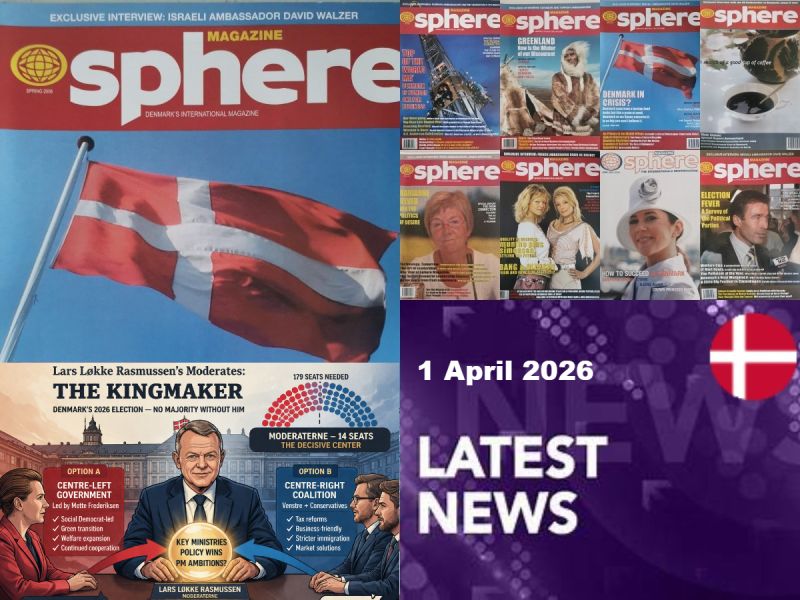
Political
The post-election coalition process remained deadlocked, with Prime Minister Mette Frederiksen continuing exploratory talks amid deep policy divisions that make an initial agreement unlikely.
Publication: Berlingske
A political scandal involving the expulsion of two MPs—one linked to a cannabis-related controversy—further weakened the right bloc, reducing its parliamentary strength below the 90-seat majority threshold.
Publication: Jyllands-Posten / TV2
Lars Løkke Rasmussen continues to hold a “kingmaker” position, declining to commit to either bloc and insisting negotiations focus on policy rather than alliances.
Publication: TV2 / DR (reported in Danish coverage)
Economic
Economic disagreements—particularly over taxation, labour markets, defence spending, and energy policy—remained the central obstacle in coalition negotiations, with parties unwilling to abandon campaign commitments.
Publication: Berlingske
Diplomacy
Danish foreign policy reporting highlighted rising geopolitical tensions involving Iran and the United States, with implications for European security and Danish strategic positioning.
Publication: Berlingske
International
Danish outlets framed the domestic political stalemate within a broader European pattern of fragmented electorates and increasingly complex coalition-building processes.
Publication: Berlingske / DR