March 2026
David Williams, Editor
April 15, 2026
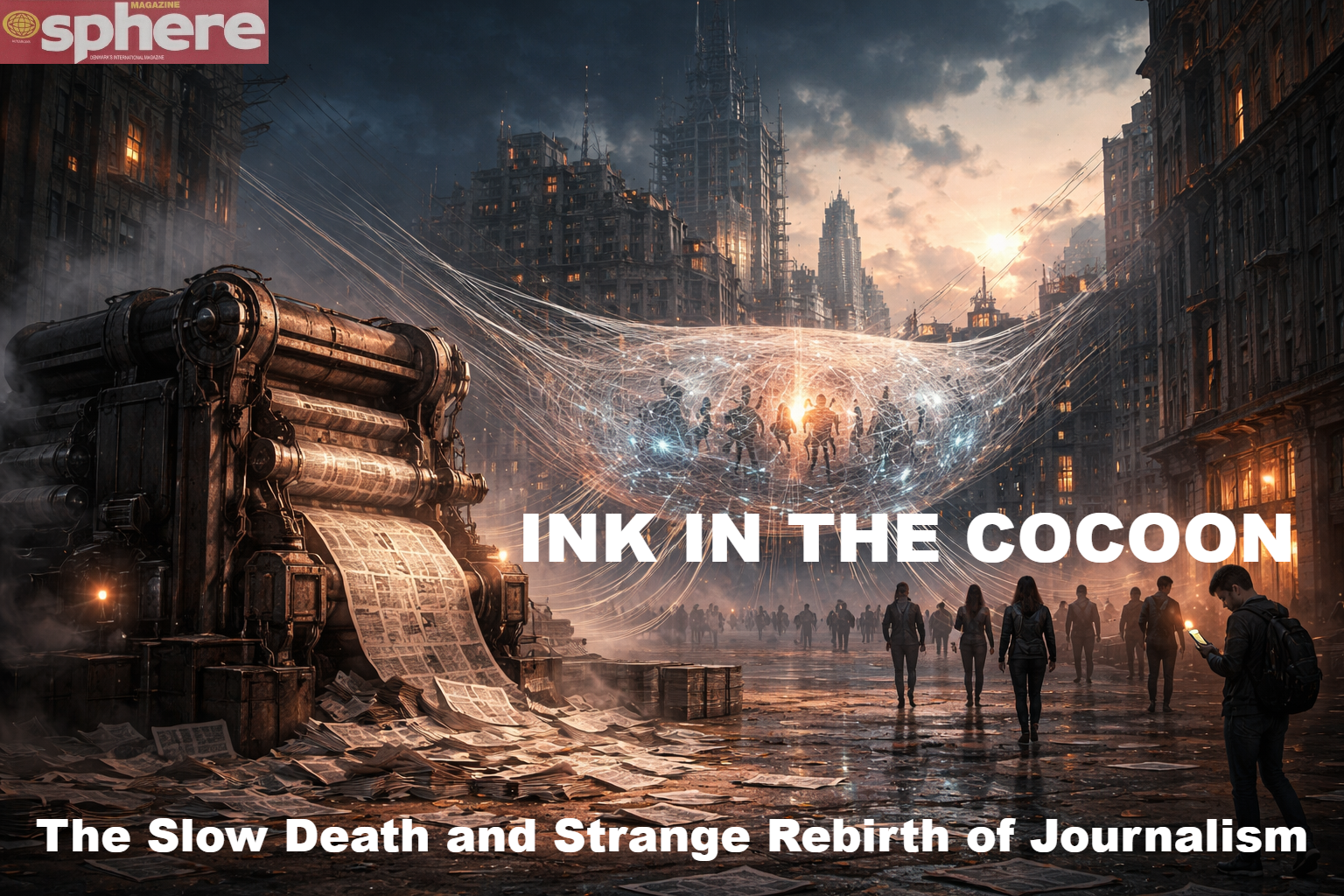
Once upon a time newspapers used to feel alive. Ink on your fingers. Pages spread across a table. A quiet sense that what you were reading mattered.
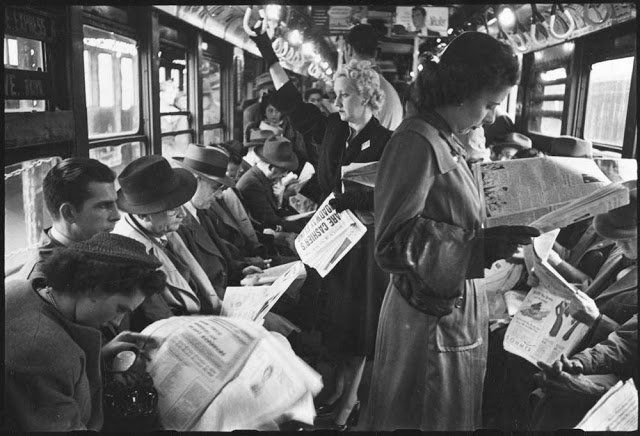
Now they feel thinner, smaller, less weighty in every sense.
Newsrooms are shrinking. Experienced reporters are leaving, desks are merging, and fewer people are doing more work under tighter pressure. Foreign bureaus are gone. Layers of editing have been stripped back. Yet the paper itself looks almost unchanged.
That is part of the problem.
The structure is the same. The tone is the same. The voice still speaks from above, as if nothing fundamental has shifted. But everything has.
Readers have not disappeared. They have moved. They scroll, watch, listen. They expect immediacy and a sense of connection. What they reject is distance. The old patrician authoritative voice no longer reassures. It not only feels cold, but sometimes it feels out of touch.

Advertising has followed attention out the door. The old model was simple. Build a large audience and sell access to it. That world is gone. Attention now is fragmented, tracked, and sold with precision that newspapers cannot match. The result is slow financial decline, followed by cuts, followed by more decline.
And still, the industry repeats itself. In truth, today’s struggling news business is simply reinventing the wheel it has been turning for 200 years. Resistance. Reinvention into the same thing. Again and again.
What is breaking now is not just the business model. It is the belief behind it.
Newspapers long saw themselves as guardians of truth and justice. There is something admirable in that. There is also a kind of blindness. Over time, that role became rigid. Too close to power. Too comfortable with access. Too slow to question itself.
Readers began to notice. Trust thinned.
Yet the industry still clings to its self-image. Like Shakespeare’s Desdemona, it sees itself as virtuous and wronged. It struggles to understand why it is no longer believed.
And now something else is happening, first beneath and now above the surface.
They call it decline, but it is actually a transition into a cocoon stage.
Inside the cocoon, a new form is taking shape. Not fully formed, not fully trusted, but unmistakable. Journalism is metamorphosing.

The word “journalist” itself is starting to feel dated, almost Dickensian. At some point, it may fade altogether. Everyone folded into a broader category. Influencers. People speaking directly, building their own audiences, doing the work themselves instead of handing it to institutions.
These figures are not the final stage. They are part of the transformation.
For all their flaws, influencers shrink the gap. They speak directly, respond quickly, and evolve in public. They are inside the conversation, not standing above it.
That matters.
Because much of traditional journalism now feels processed. Efficient, polished, but distant. Too often, it reads like copy rather than reporting. Information is delivered, but not always felt.
Influencers, imperfect as they are, bring back immediacy. Presence. A sense that someone is actually there.
But, for sure, this is not the endpoint. It is the cocoon stage. Messy, unstable, necessary. Something else will emerge from it. Something that combines credibility with connection, rigour with voice.
The old institutions are heavy and overlaboured. Their history gave them strength. Now it slows them down. Around them, lighter forms are moving faster, testing new ground.
The cocoon is tightening. It cannot hold forever.

The question is not whether the industry will survive. It is whether those who once defined it can recognise what it is becoming.
INTERNATIONAL: Trump AI “Christ” Image Triggers Political Outrage After Epstein-Like Figure Appears in Viral Post

President Donald Trump followed a bizarre rant against Pope Leo XIV, in which he criticised what he described as the Pope’s “weak leadership” and accused elements of the Vatican of being too political, before turning the focus back to domestic cultural issues and media bias. He also repeated familiar grievances about religious institutions not being “strong enough” in confronting what he calls cultural decline. It was a typical freewheeling statement, shifting between religion, politics, and personal frustration, without a clear single message.
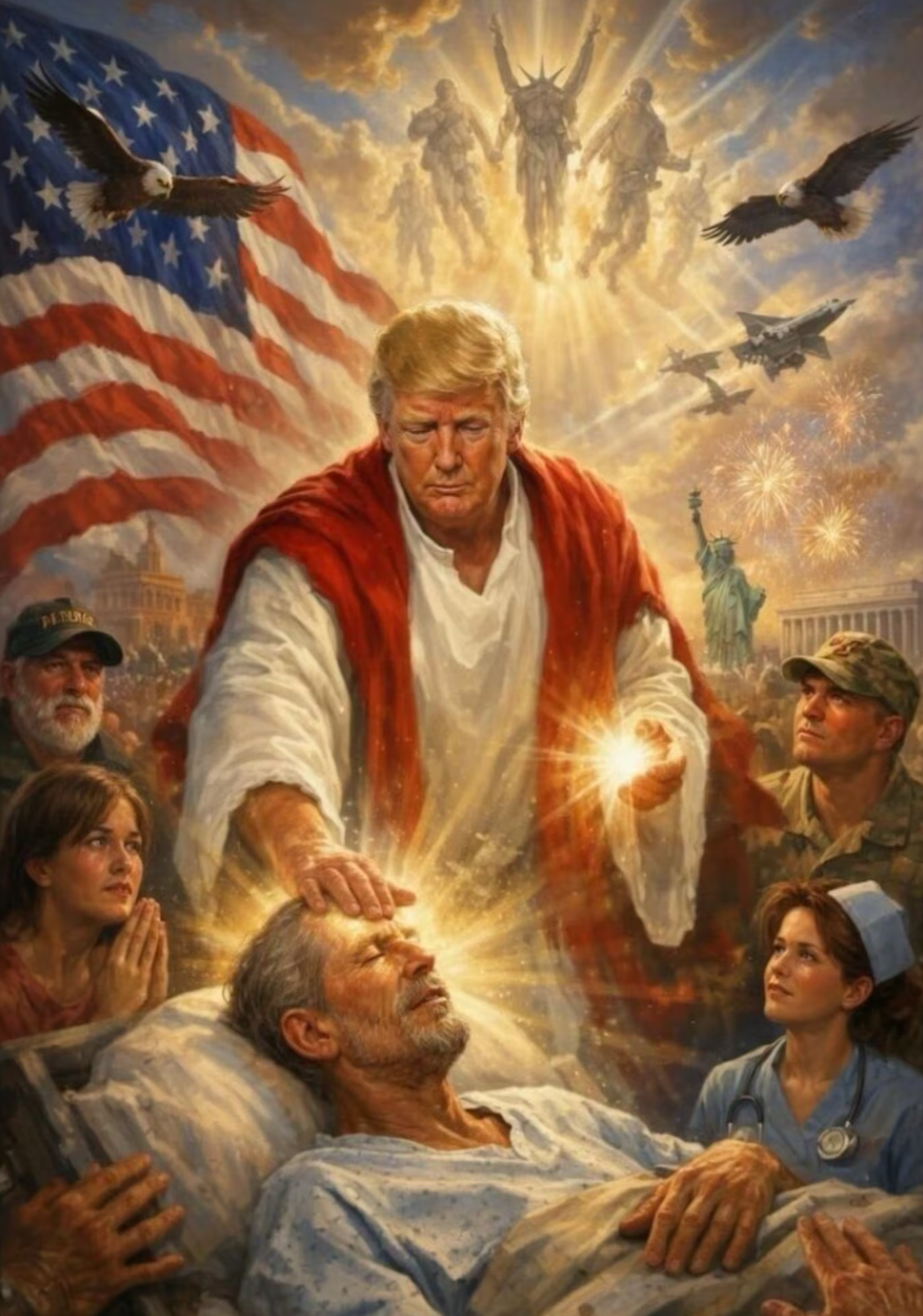
Shortly after, Trump posted an AI-generated image depicting himself as Jesus Christ.
The image, posted to Truth Social late Sunday night, shows Trump in a Christ-like role, laying his hand on a patient in a hospital bed as if performing a healing. In a separate version circulating alongside it, he appears in a blessing pose over a kneeling figure resembling Jeffrey Epstein. The combination of the imagery quickly drew attention and sparked a wave of political outrage after it was shared from Trump’s official account.
What might have stayed as internet satire instead became something far more politically charged. Because it came directly from an official account, critics argued it could no longer be dismissed as a joke or meme. Within hours, it had spread across social media and into cable news coverage.
The post, widely interpreted as AI-generated or digitally manipulated, immediately went viral. Opponents said the use of religious imagery alongside a figure associated with serious criminal allegations was deliberately provocative and deeply inappropriate.
Political reaction intensifies
Democratic lawmakers were quick to condemn the post, focusing on both the religious symbolism and the association with Epstein.
One senior Democratic member of Congress said:
“When something like this comes from an official presidential account, it is no longer meme culture. It is political communication. It is reckless and offensive.”
Another Democratic aide added:
“It blurs the line between propaganda and satire in a way that deliberately inflames public anger while avoiding accountability.”
Republicans were more divided. Some moved quickly to distance themselves from the imagery, while others defended it as part of a broader shift toward provocative political communication online.
A Republican strategist said:
“You can disagree with it, but posting provocative imagery is not new in modern politics. The outrage cycle is part of the strategy now.”
Another GOP-aligned commentator took a more critical view:
“Even for Trump’s standards, this is unnecessarily inflammatory. Posting it from an official account elevates it into something far more serious than an online meme.”
What Trump is doing, according to analysts
If the post did originate from Trump’s own account, analysts say the goal is less about literal meaning and more about controlling attention.
Political communication experts often point to three overlapping effects.
First, attention dominance. The image forces itself into the news cycle, pushing aside competing stories simply because it triggers an immediate reaction.
Second, symbolic framing. The Christ-like imagery casts Trump in a posture of authority or moral significance, while the Epstein-like figure introduces scandal and discomfort in the same frame. The contrast is deliberate and hard to ignore.
Third, ambiguity as strategy. The surreal, AI-generated style makes interpretation slippery. Critics rush to decode it, supporters dismiss the criticism, and the post continues to circulate either way.
One media analyst put it simply:
“The power of these posts is not clarity, but confusion. Everyone argues about meaning, and Trump remains at the center of attention.”
Broader political impact
If confirmed as a post from an official account, it would mark another step in the normalisation of AI-generated and meme-style communication at the highest levels of politics.
What used to stay in anonymous online spaces now travels through official channels, gaining weight and visibility by association alone.
And regardless of intent, the effect is consistent. The conversation becomes louder, more emotional, and harder to ground in policy or substance. When visual shock takes over. Debate follows close behind.
*The quotes cited in this article reflect reactions reported across major U.S. media outlets, including CNN, NBC News, and Politico, as well as commentary from political strategists and congressional aides speaking on background. In several cases, the remarks are representative of broader party sentiment rather than verbatim statements tied to a single named interview or publication.
Update: Donald Trump has since acknowledged posting the image, telling reporters he simply saw it as “me as a doctor.”