The Mirror the West Refuses to Face
Creatoreux
April 4, 2026
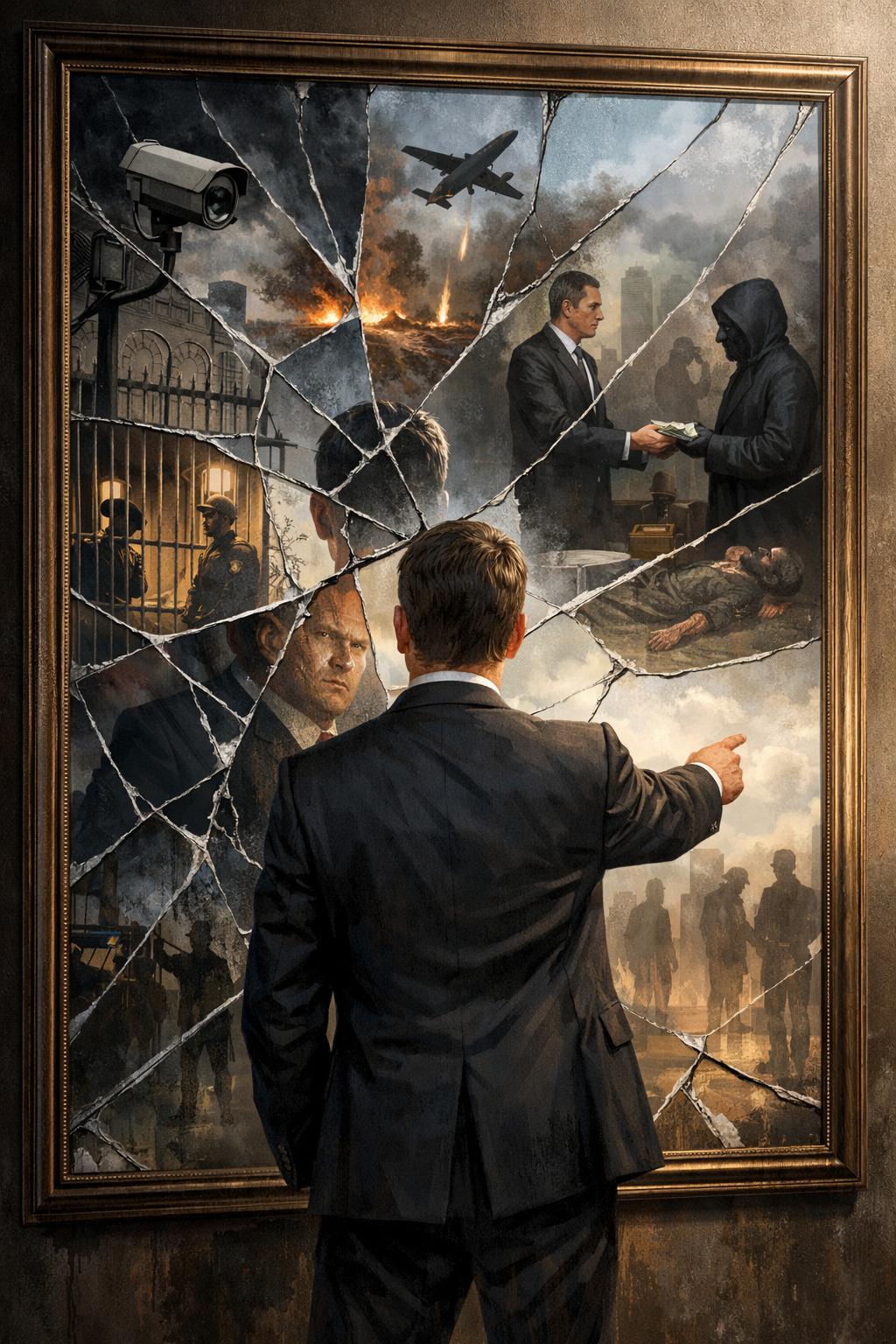
The West has a habit of pointing outward. It highlights the moral failures of others, often loudly and with confidence, as if exposure alone is proof of its own virtue. But the world is not blind. Calling out injustice elsewhere does not erase the uncomfortable truths closer to home.
Take the constant criticism of governments like that of Vladimir Putin, where suspicious deaths and repression are rightly condemned. Yet those criticisms lose force when set against unresolved questions in the West itself. The long shadow of Jeffrey Epstein, the lack of full transparency around powerful networks, and lingering doubts about accountability all feed a sense that justice is not as clean or consistent as it claims to be.
Then there is foreign policy. The phrase “rules-based international order” is repeated so often it begins to sound like fact rather than argument. But to many outside Europe and North America, those rules look selective. Sanctions can cripple entire economies. Military interventions, from Iraq to Libya, and now Iran, have left deep scars. These actions are framed as necessary, even moral, yet they often appear as pressure tactics designed to maintain influence rather than uphold universal principles.
History lingers in all of this. The wealth and power of the West did not emerge in isolation. Colonial systems, exploitation, and racial hierarchies played their part. That legacy has not simply vanished. It shapes perceptions, especially in countries that remember exactly how those systems worked.
None of this means the West is uniquely flawed. Every power has its contradictions. But there is a difference between having them and refusing to see them. If the West wants to lead, or even just to be trusted, it has to look inward with the same intensity it directs outward. That means honesty, not just about policy, but about identity.
And here is the uneasy thought. What if the problem is not just behaviour, but foundation? If a system was built on imbalance, can it ever fully escape it, or does it simply learn to speak in softer terms while keeping the same structure intact?
At some point, the question stops being whether the West believes its own story. It becomes whether anyone else still does.