Can the Nordics Become an AI Superpower?
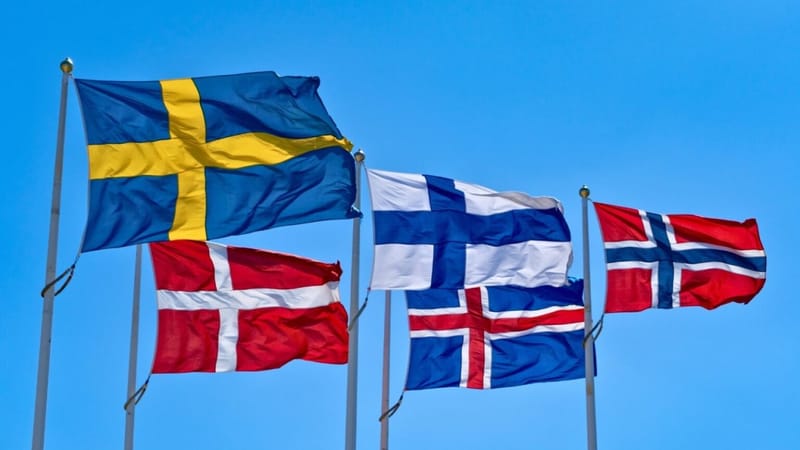
In June 2026, researchers, policymakers, and technology leaders from across Scandinavia will gather in Odense for the 15th Scandinavian Conference on Artificial Intelligence, SCAI 2026, hosted by the University of Southern Denmark. The event says something important about where the Nordic region believes the future of artificial intelligence is heading.
SCAI is more than an academic conference. It reflects a growing sense that the Nordic countries are trying to approach AI differently from the United States and China.
That difference could become significant.
For years, the global AI race has been framed around scale and dominance. The United States leads through giant private technology firms, venture capital, and immense computational infrastructure. China competes through state-backed industrial strategy, huge datasets, and centralised planning.
Against that backdrop, the Nordic countries seem almost too small to matter.
Denmark, Sweden, Norway, Finland, and Iceland together have fewer people than many Chinese cities. None has a domestic equivalent to OpenAI, Google, Tencent, or Alibaba. Their startups often succeed only to be absorbed into larger American ecosystems before they mature into global powers.
On paper, the Nordics should not be central players in AI.
Yet that assumption may miss something deeper that is beginning to emerge.
The Nordic countries increasingly appear to be asking a different question altogether. Instead of focusing entirely on who builds the biggest models the fastest, they seem more interested in asking what kind of societies AI should create.
That sounds abstract at first. It is not.
The SCAI conference theme, “AI for Good: Innovation, Ethics, Society,” captures this shift in thinking. American AI discourse is dominated by acceleration and disruption. Chinese AI strategy often revolves around national strength and state capacity. The Nordic approach keeps circling back to trust, legitimacy, participation, and social consequence.
There may be a reason for that.
The Nordic region possesses a set of advantages that are easy to overlook because they do not resemble traditional technological power. These are societies with high institutional trust, highly digitised public sectors, strong engineering education, advanced infrastructure, and unusually close cooperation between governments, universities, and industry.
Those qualities may become increasingly important as AI moves beyond chatbots and deeper into healthcare, education, welfare systems, defence, logistics, and public administration.
The real transformation may not come from AI talking to us. It may come from AI governing systems around us.
If that happens, trust becomes strategic.
One can already see signs of regional coordination taking shape. SCAI itself is jointly organized by Danish, Swedish, and Norwegian AI communities. Elsewhere, Nordic collaboration increasingly links Finland’s FCAI initiative, Sweden’s WASP program, Norway’s NORA network, and Denmark’s Pioneer Centre for AI.
This matters because fragmentation has long been Europe’s weakness in technology.
No single Nordic country can compete alone with the United States or China. Together, however, they may be experimenting with something closer to a federated AI region. Not one giant Silicon Valley-style ecosystem, but an interconnected network built around shared standards, research collaboration, and institutional trust.
There is a historical parallel worth considering.
Europe did not challenge Boeing through isolated national aviation industries. Airbus emerged only after European states pooled expertise and industrial strategy. The Nordic AI ecosystem may represent an early version of something similar.
But AI introduces another factor that could reshape global power in unexpected ways: energy.
The future of AI is not just about software. It is about electricity, cooling systems, semiconductor supply chains, and physical infrastructure. Training advanced AI models requires staggering amounts of energy.
Suddenly, the Nordic countries look far more strategically important.
They have cold climates that reduce cooling costs for data centres. They possess abundant renewable energy. Their infrastructure is modern and politically stable. If AI development becomes constrained by energy consumption, the Nordics could become one of the world’s most attractive regions for sustainable computing infrastructure.
Europe already worries about dependence on American cloud systems and Chinese hardware supply chains. In that context, the Nordic countries could become central to building a more sovereign European AI ecosystem.
Still, there are contradictions at the heart of this vision.
Can ethical AI exist without technological sovereignty?
The Nordics speak increasingly about trustworthy and human-centred AI, yet much of the underlying infrastructure remains American. The foundational models, cloud platforms, chips, and operating systems are controlled elsewhere.
That creates a difficult question.
Can a region truly shape the future of AI if it does not control the foundations upon which AI is built?
There is also the problem of speed.
Nordic societies value consensus, regulation, and deliberation. Those traits create stability and social cohesion. Frontier technological races, however, often reward aggression, rapid execution, and extreme risk-taking.
Can democratic coordination move fast enough in an era defined by exponential technological acceleration?
Or could caution itself become a strategic weakness?
Yet there is another possibility that is rarely discussed.
The current phase of AI may not last forever. Right now, the race is dominated by scaling models, attracting capital, and competing for computational power. But once AI systems become deeply integrated into healthcare, schools, welfare systems, defence, finance, and governance, public trust may matter as much as raw capability.
If citizens stop trusting AI systems, deployment slows regardless of how powerful the technology becomes.
This is where the Nordic region may hold an advantage that larger powers increasingly struggle to replicate.
These are among the highest-trust societies in the world. Citizens generally believe institutions act competently and in the public interest. That trust creates political room for experimentation that many larger countries no longer possess.
In that sense, the Nordic countries may be building something larger than an AI industry.
They may be trying to build an AI social contract.
And that could become one of the defining geopolitical questions of the century.
The deeper issue is not whether the Nordics can overpower the United States or China in a conventional technological arms race. They almost certainly cannot.
The more interesting possibility is that they become indispensable because they offer something the dominant powers increasingly struggle to create: AI systems that democratic societies are willing to trust.
If the United States represents AI capitalism and China represents AI statism, the Nordic region may be exploring a third path entirely.
A high-trust AI civilisation.
Whether such a model can survive the brutal economics of the global technology race remains uncertain.
But the fact that the Nordics are even attempting it may turn out to be one of the most intellectually important developments in artificial intelligence today.
Support Sphere Magazine and Subscribe to our LINKEDIN NEWSLETTER