Beyond Algorithms: How AI Is Becoming an Unexpected Ally in the Fight for LGBTQ Rights
David Williams
When people think about artificial intelligence, they often imagine self-driving cars, chatbots, or futuristic robots. What they rarely picture is AI helping a transgender teenager find safe healthcare, protecting LGBTQ users from online harassment, or helping activists challenge discrimination.
Yet this is already happening.
Technology has always reflected the values of the people who build it. The question is no longer whether AI will shape society. It is whether society can shape AI into a force for greater equality. In many corners of the world, LGBTQ communities are showing what that looks like in practice.
Take online safety. Hate speech remains one of the biggest challenges facing LGBTQ people on social media. Platforms such as YouTube, Facebook, and Instagram increasingly use AI systems to identify and remove abusive content before it spreads. While these systems are far from perfect, they have become an important first line of defense against harassment campaigns that once went unchecked.
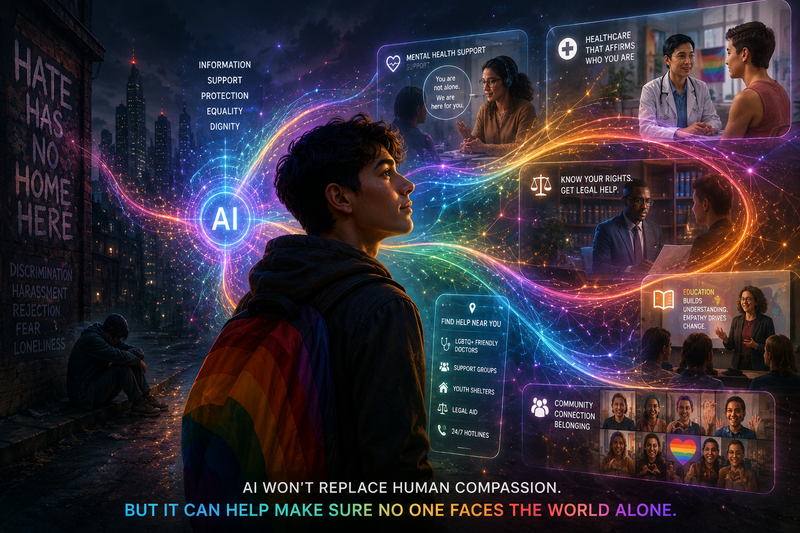
Healthcare offers another powerful example. Organizations and clinics are beginning to use AI-driven tools to help patients find appropriate care and navigate complex health systems. For transgender individuals, this can mean quicker access to information about gender-affirming care, mental health support, and healthcare providers who understand their needs. In rural areas where specialist services are scarce, these tools can be particularly valuable.
One particularly innovative example comes from crisis support services. AI systems are now being used to analyse anonymous conversations and identify signs that a person may be experiencing severe distress, depression, or suicidal thoughts. LGBTQ youth are statistically more likely to experience mental health challenges due to bullying, discrimination, and social isolation. By flagging high-risk conversations in real time, AI can help human counsellors prioritise urgent cases and potentially save lives. In this role, the technology does not replace human compassion. It helps ensure that compassion reaches the people who need it most.
AI is also transforming access to legal information. Imagine being fired because of your sexual orientation or denied housing because of your gender identity. Many people do not know where to begin. AI-powered legal assistants can explain rights, summarize relevant laws, and help individuals understand the options available to them. What once required hours of research can now be accessed in minutes.
Education may prove to be AI's most enduring contribution. Around the world, AI tutors and learning platforms are helping students explore topics ranging from LGBTQ history to inclusive language. Knowledge has always been one of the strongest antidotes to prejudice. The easier it becomes to access accurate information, the harder it becomes for ignorance to thrive.
Of course, AI is not a magic solution. Algorithms can inherit human biases, and privacy concerns remain serious, especially for LGBTQ people living in countries where discrimination is widespread. Technology alone cannot create justice. It can only amplify the intentions behind it.
That is precisely why the current moment matters. For the first time in history, communities that have often been marginalized have an opportunity to help shape a technology that will influence nearly every aspect of modern life.
The story of AI and LGBTQ rights is not really about machines. It is about people. It is about whether innovation can be directed toward dignity rather than division, inclusion rather than exclusion. If that happens, AI may become far more than a technological breakthrough. It may become one of the most powerful tools yet created for expanding human freedom. For a young person seeking acceptance, a victim of discrimination searching for justice, or someone in crisis looking for hope, that future could make all the difference.
Support Sphere Magazine and Subscribe to our LINKEDIN NEWSLETTER