AI and Democracy: A Danish Opportunity after Weeks of Uncertainty?
David Williams
Following ten weeks of negotiations, Denmark's politicians have finally formed a new government. As the political uncertainty subsides, Sphere Magazine considers whether artificial intelligence could help make government more efficient, responsive, and effective.
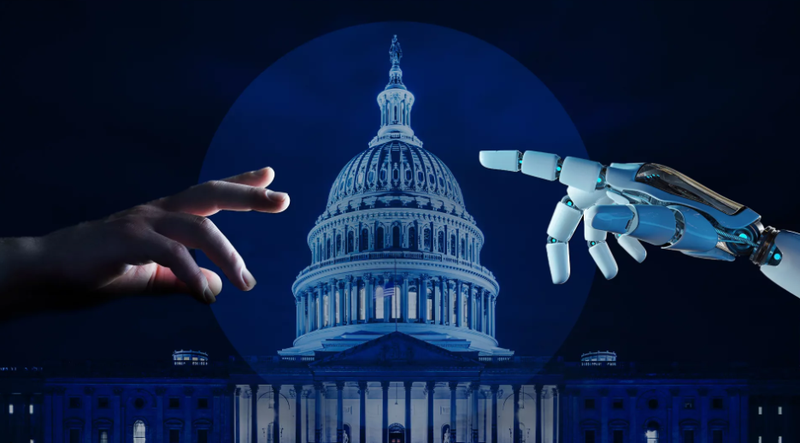
Much of the discussion surrounding artificial intelligence has focused on disruption, misinformation, and the risks posed to democratic institutions. Yet there is another possibility that receives far less attention. What if AI could strengthen democracy rather than weaken it?
Denmark may be uniquely positioned to explore that question.
Modern democracy suffers from a paradox. Citizens have access to more information than at any point in history, yet many feel less informed about the decisions that shape their lives. Legislation grows increasingly complex. Political debates become compressed into slogans, headlines, and social media fragments. Participation often gives way to spectatorship.
Artificial intelligence offers a potential remedy. Properly designed, AI could act as a democratic translator, helping citizens understand proposed legislation, compare party positions, and explore the likely consequences of policy choices. Rather than replacing political judgment, it could equip voters with better tools to exercise it.
Imagine a citizen asking how a proposed pension reform would affect their municipality, or how changes to environmental regulation might impact local businesses. AI could provide clear, accessible explanations drawn directly from public documents that few voters have the time to read in full. Instead of simplifying democracy, it could make complexity more understandable.
Yet this vision comes with a profound warning.
The same technology capable of helping citizens understand politics could also become the most sophisticated tool of political influence ever created.
Experts have warned that advanced language models could allow political actors to tailor messages to individual voters at unprecedented scale. Traditional campaigns broadcast a single message to millions. AI can generate thousands of variations, adjusting language, tone, and emotional appeal to specific audiences. The risk is not merely misinformation. It is the possibility that persuasion itself becomes industrialised.
Democracy depends upon citizens making choices. If AI becomes powerful enough to shape how those choices are framed, interpreted, or emotionally experienced, the line between informing voters and influencing them begins to blur.
This is where Denmark's democratic culture becomes especially important.
Denmark consistently ranks among the world's highest-trust societies. Public institutions generally enjoy greater legitimacy than in many other democracies. Digital literacy is widespread. Government transparency remains a deeply embedded principle. These characteristics create conditions where AI could potentially serve the public interest rather than narrow political or commercial interests.
The challenge is therefore not technological. It is constitutional and philosophical.
Can AI be designed to expand understanding without directing opinion? Can it help citizens navigate complexity without nudging them toward predetermined conclusions? Can it strengthen democratic participation without becoming a tool of subtle manipulation?
These questions may ultimately matter more than the technology itself.
The greatest democratic challenge of the twenty-first century may not be a lack of information, but a lack of comprehension. Democracy depends not merely on access to facts, but on the ability to make sense of them. AI has the potential to close that gap. It also has the potential to exploit it.
The question is not whether artificial intelligence will influence democracy. It already does. The real question is whether democracies such as Denmark's can build institutions strong enough to ensure that AI serves citizens rather than steers them.
As political observers increasingly grapple with the implications of artificial intelligence, one principle seems worth remembering:
"The strength of a democracy is measured not by the volume of information it produces, but by the quality of understanding it enables."
If AI can deepen that understanding while preserving individual judgment, it may become one of democracy's most valuable tools. If it cannot, it may reveal that the greatest threat to democracy was never a lack of information, but the growing ability to shape how people understand it.
Support Sphere Magazine and Subscribe to our LINKEDIN NEWSLETTER